
Most spiders make people nervous. They hide in dark corners, spin sticky webs, and disappear the moment they’re noticed. But jumping spider is different.
Small, curious, and surprisingly intelligent, jumping spiders have earned a special place in the hearts of nature lovers. Unlike many spiders, they don’t rely on webs to catch prey. Instead, they stalk their target with remarkable patience before launching a perfectly timed jump that rarely misses.
Their large, expressive eyes and quick movements even make them appear friendly—something few spiders can claim.
Whether you’ve spotted one in your garden, inside your home, or while hiking, you may have wondered:
- Are jumping spiders dangerous?
- Can they bite humans?
- Why do they jump?
- Are they actually intelligent?
In this complete guide, you’ll discover everything you need to know about these fascinating little hunters, from their unique vision and hunting techniques to the surprising reasons many people enjoy having them around.
Table of Contents
What Is a Jumping Spider?
A jumping spider belongs to the family Salticidae, one of the largest spider families in the world. Scientists have identified more than 6,000 species, making them one of the most diverse groups of spiders on Earth.
Unlike web-building spiders, jumping spiders are active hunters. They depend on their exceptional eyesight and athletic ability rather than sticky webs to capture food.
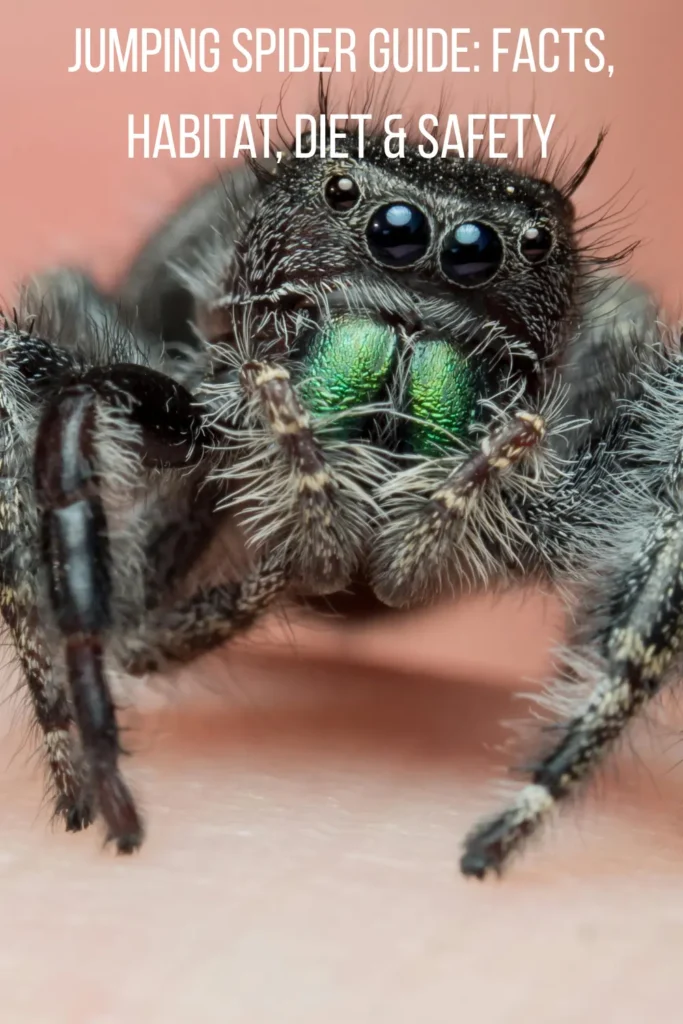
Their compact body, fuzzy appearance, and oversized front-facing eyes make them easy to recognize. In fact, those large eyes provide some of the best vision found in any spider species.
Most jumping spiders grow between 4 and 18 millimeters long, although their exact size varies by species. Despite their tiny bodies, they possess incredible strength and agility, allowing them to leap many times their own body length.
Why Are Jumping Spiders Different from Other Spiders?
At first glance, jumping spiders may seem like ordinary spiders. However, several unique characteristics set them apart.
They Have Excellent Eyesight
Unlike many spiders that rely mainly on vibrations, jumping spiders have exceptional vision. Their large forward-facing eyes help them judge distance accurately, recognize movement, and even distinguish colors.
This outstanding eyesight allows them to plan each jump with remarkable precision.
They Don’t Build Hunting Webs
Most spiders trap insects using silk webs. Jumping spiders take a completely different approach.
They quietly stalk their prey, move into position, and launch themselves with incredible speed. This hunting strategy is more similar to a cat stalking a bird than a typical spider waiting in a web.
They Are Surprisingly Curious
Many people notice that jumping spiders seem to watch them.
Rather than immediately running away, they often pause, tilt their bodies, and appear to observe nearby movement. While they aren’t “friendly” in the human sense, this curious behavior has made them one of the most admired spiders among wildlife photographers and nature enthusiasts.
Where Do Jumping Spiders Live?
One of the reasons jumping spiders are so successful is their ability to adapt to many different environments.
They can be found on every continent except Antarctica and thrive in a wide variety of habitats.
Some of the most common places include:
- Home gardens
- Parks
- Forests
- Meadows
- Shrubs
- Rocky landscapes
- Tropical rainforests
- Agricultural fields
- Around windows and walls
They prefer sunny areas where insects are plentiful because warm conditions help them remain active while hunting.
If you’ve ever noticed a tiny spider moving confidently across a windowsill during the day, there’s a good chance it was a jumping spider.
What Do Jumping Spiders Eat?
Despite their small size, jumping spiders are fearless predators.
Their menu includes many common insects that gardeners often consider pests.
A typical diet consists of:
- Flies
- Mosquitoes
- Gnats
- Moths
- Beetles
- Aphids
- Small crickets
- Ants
- Caterpillars
- Other spiders
Larger species are even capable of catching prey almost as large as themselves.
Instead of trapping insects in silk, they rely on careful observation, stealth, and explosive speed.
This natural pest control is one reason many gardeners welcome jumping spiders into their yards.
How Jumping Spiders Hunt, Jump, See, and Interact with Humans
How Do Jumping Spiders Hunt Without Webs?
When people think of spiders, they usually imagine sticky webs waiting to trap insects. That’s not how a jumping spider hunts.
Instead of waiting for prey, it actively searches for food during the day. Once it spots an insect, it slowly creeps closer while keeping its eyes locked on the target. When the distance is just right, it leaps with incredible speed and accuracy, grabbing its meal before it has a chance to escape.
Before every jump, the spider attaches a thin silk thread behind it. Think of it as a safety rope. If the jump fails or the spider slips, the silk prevents it from falling and allows it to climb back up.
This clever combination of sharp vision, careful planning, and a built-in safety line makes jumping spiders some of the most successful hunters in the spider world.
Why Can Jumping Spiders Jump So Far?
Considering their tiny size, their jumping ability is astonishing.
Many species can leap 10 to 50 times their own body length. If humans could do the same, we could jump over a multi-story building in a single bound.
Unlike grasshoppers, jumping spiders don’t rely on large muscles alone. They use changes in blood pressure inside their legs, creating a powerful hydraulic system that launches them forward almost instantly.
Every jump is carefully calculated. Thanks to their excellent eyesight, they judge distance with remarkable accuracy, making missed jumps surprisingly rare.
Do Jumping Spiders Build Webs?
Yes—but not for catching prey.
Although jumping spiders produce silk, they use it in different ways:
- Creating a safe resting place at night
- Protecting their eggs
- Making a shelter during bad weather
- Leaving a safety line before jumping
- Molting safely while growing
Unlike orb-weaver spiders, you won’t find a large circular hunting web made by a jumping spider.
Why Do Jumping Spiders Have Such Big Eyes?
One of the first things people notice is their adorable face with two large front eyes.
These eyes aren’t just for appearance—they’re one of the spider’s greatest strengths.
Jumping spiders have eight eyes, each with a specific job. Their large front-facing eyes provide detailed, color vision, while the smaller eyes help detect movement from different directions.
This gives them several advantages:
- Spot tiny insects from a distance
- Judge depth before jumping
- Track moving prey accurately
- Detect approaching predators
- Recognize changes in their surroundings
Scientists consider their eyesight among the best of all spiders.
Are Jumping Spiders Intelligent?
For an animal with a brain smaller than a grain of rice, jumping spiders display surprisingly complex behavior.
Researchers have observed them:
- Choosing different hunting routes when the direct path is blocked
- Waiting patiently for the perfect moment to attack
- Learning from unsuccessful hunting attempts
- Exploring unfamiliar objects with curiosity
- Adapting their strategy depending on the type of prey
They don’t think like mammals, but they show a level of planning and problem-solving that’s impressive for such a small creature.
Are Jumping Spiders Dangerous to Humans?
This is one of the most common questions people ask—and the good news is reassuring.
For the vast majority of people, jumping spiders are not dangerous.
They are shy by nature and usually avoid humans whenever possible. If they notice a person nearby, they’re much more likely to run away or jump to safety than attack.
Most encounters end with the spider quietly disappearing without any contact.
Can a Jumping Spider Bite?
Yes, but bites are uncommon.
A jumping spider may bite only if:
- It is trapped against your skin
- It feels threatened
- Someone tries to squeeze or handle it roughly
Even then, their small fangs often struggle to penetrate human skin.
If a bite does occur, it’s usually similar to a mild bee sting or mosquito bite, causing temporary redness, slight swelling, or itching that fades within a short time.
Serious reactions are extremely rare.
Is Jumping Spider Venom Dangerous?
Like almost all spiders, jumping spiders produce venom to subdue their prey.
However, this venom is designed for tiny insects—not humans.
For healthy adults, their venom is considered medically insignificant. In most cases, a bite causes only minor local irritation.
If someone experiences severe swelling, difficulty breathing, or signs of an allergic reaction after any spider bite, they should seek medical attention promptly, although such reactions to jumping spiders are uncommon.
Do Jumping Spiders Make Good Pets?
In recent years, jumping spiders have become surprisingly popular among people who enjoy observing small animals.
Many enthusiasts appreciate them because they are:
- Active during the day
- Easy to watch
- Curious in their surroundings
- Small and quiet
- Fascinating hunters
Their expressive eyes and unique behavior have even made them social media favorites.
If kept responsibly in an appropriate enclosure with proper care, they can provide an interesting window into the world of tiny predators.
Life Cycle, Fun Facts, FAQs, and Conclusion
The Life Cycle of a Jumping Spider
Like all spiders, a jumping spider goes through several stages as it grows. Although tiny, its life is full of challenges—from avoiding predators to finding food and eventually raising the next generation.
1. Egg Stage
The journey begins when the female lays her eggs inside a soft silk sac. She carefully hides the egg sac under leaves, inside tree bark, or in other sheltered places to protect it from predators and harsh weather.
Unlike many insects, the mother often stays close to guard the eggs until they hatch.
2. Spiderling Stage
After a few weeks, tiny spiderlings emerge. They look like miniature versions of the adults but are much smaller and less colorful.
From the very beginning, they are independent hunters. There is no parental feeding or care once they leave the nest.
3. Juvenile Stage
As they grow, jumping spiders shed their hard outer skin several times through a process called molting.
Each molt allows the spider to become larger and stronger. During this time, it becomes a more skilled hunter and develops brighter colors, depending on the species.
4. Adult Stage
Once fully grown, the spider is ready to reproduce.
Males often perform fascinating courtship dances, waving their legs and displaying colorful markings to attract females. These dances reduce the risk of being mistaken for prey and increase the chances of successful mating.
How Long Do Jumping Spiders Live?
Most jumping spiders have relatively short lives.
On average:
- Wild: 6 months to 2 years
- In captivity: Up to 2–3 years with proper care
Their lifespan depends on factors such as species, climate, food availability, and the presence of predators.
Natural Predators
Despite being excellent hunters, jumping spiders are also prey for many animals.
Some of their natural predators include:
- Birds
- Lizards
- Frogs
- Larger spiders
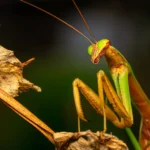
- Praying mantises
- Wasps that specialize in hunting spiders
Their best defense is quick reflexes, excellent eyesight, camouflage, and the ability to leap away from danger in an instant.
Why Jumping Spiders Are Good for Your Garden
If you spot a jumping spider in your yard, there’s usually no reason to remove it.
These tiny predators help keep insect populations under control by feeding on:
- Aphids
- Mosquitoes
- Flies
- Small caterpillars
- Plant-eating insects
Because of this, many gardeners consider them natural pest controllers. Having a few around can reduce the need for chemical pesticides while supporting a healthier garden ecosystem.
Amazing Facts About Jumping Spiders
Here are a few facts that surprise many people:
- There are more than 6,000 known species of jumping spiders worldwide.
- They have some of the sharpest eyesight of any spider.
- Many species can see in color.
- They hunt during the day instead of at night.
- Their jumps can reach many times their own body length.
- They leave a silk safety line before every jump.
- Some species perform elaborate dances to attract mates.
- They don’t use webs to catch prey.
- Their curious behavior has made them one of the most photographed spiders in the world.
Common Myths vs. Facts
| Myth | Fact |
| All spiders build webs. | Jumping spiders hunt instead of trapping prey in webs. |
| Jumping spiders attack people. | They usually avoid humans and prefer to escape. |
| Every spider is dangerous. | Most jumping spiders pose little risk to people. |
| They jump because they’re aggressive. | They jump to hunt, travel, or avoid danger. |
| Large eyes make them scary. | Those eyes actually help them judge distance and spot prey with incredible accuracy. |
Frequently Asked Questions
Are jumping spiders poisonous?
No. They produce venom to catch insects, but it is not considered dangerous to healthy humans.
Can jumping spiders recognize people?
There is no evidence that they recognize individual humans the way pets do. However, they can detect movement and may appear to watch people with curiosity because of their excellent eyesight.
Do jumping spiders spin webs?
Yes, but not to catch food. They use silk for shelters, egg sacs, molting, and safety lines before jumping.
What attracts jumping spiders?
They are attracted to places with plenty of insects, sunlight, and safe hiding spots. Gardens and areas around windows often provide ideal conditions.
Can jumping spiders live indoors?
Yes. They sometimes enter homes while searching for insects and are generally harmless. If left alone, they often help reduce small indoor insect populations.
Final Thoughts
It’s easy to understand why jumping spiders have become some of the world’s most admired arachnids. Their remarkable eyesight, lightning-fast jumps, curious behavior, and natural hunting skills make them unlike almost any other spider.
Although they may look intimidating at first, they are generally shy, beneficial, and fascinating to observe. Whether you find one exploring your garden or peeking from a windowsill, take a moment to watch it—you’ll likely witness one of nature’s most skilled little hunters in action.
The next time someone asks whether a jumping spider is dangerous, you’ll know the answer: it’s far more interested in catching tiny insects than bothering people.