

Introduction: The Silent Predator of Nature
The natural world is full of incredible creatures, but few are as fascinating as the praying mantis.
At first glance, it looks calm, almost spiritual — as if it is praying. But in reality, it is one of the most efficient and deadly insect hunters on Earth.
This article will uncover everything about the praying mantis: its behavior, diet, habitat, life cycle, and even the myths surrounding it.
What Makes the Praying Mantis So Unique?
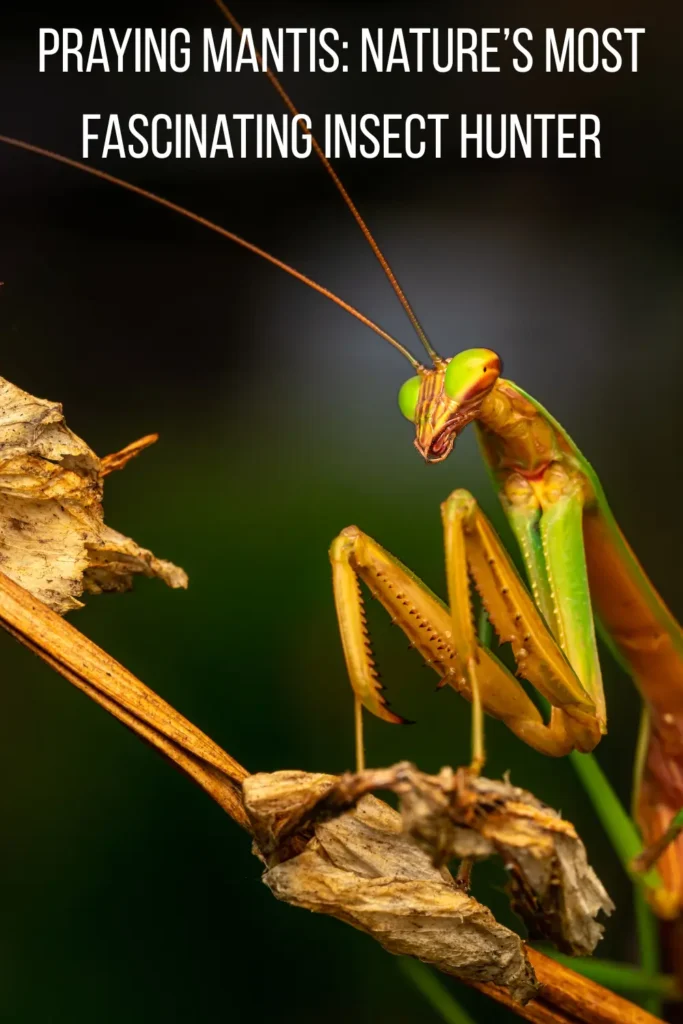
The praying mantis is instantly recognizable due to its folded front legs. These legs are not for prayer — they are powerful hunting tools designed to grab prey in milliseconds.
Unlike most insects, the mantis can:
- Rotate its head almost 180 degrees
- Track moving prey with precision
- Stay completely motionless for long periods
- Strike faster than the human eye can follow
This makes it one of the most efficient ambush predators in the insect world.
Habitat: Where Do Praying Mantises Live?
Praying mantises are highly adaptable and can survive in many environments.
You can find them in:
- Gardens
- Bushes and shrubs
- Forest edges
- Grasslands
- Agricultural fields
They are found on almost every continent except Antarctica.
Gardeners often consider them beneficial because they naturally reduce pest populations.
Diet: What Does a Praying Mantis Eat?
The praying mantis is a strict carnivore. It feeds on live insects and sometimes small animals.
Common prey includes:
- Flies
- Crickets
- Grasshoppers
- Moths
- Bees
- Spiders
Larger mantis species can even capture:
- Small frogs
- Lizards
- Tiny birds (rare cases)
Important: They do not eat plants at all — only living prey.
Hunting Strategy: How It Attacks Its Prey
The praying mantis is a master of patience.
Here’s how it hunts:
- It remains completely still and camouflaged
- It waits for prey to come close
- It rapidly extends its front legs
- It grabs and immobilizes the victim
- It eats while still holding the prey
Its strike is so fast that most prey cannot react in time.
Life Cycle of a Praying Mantis
The life cycle includes three main stages:
1. Egg Stage
Females lay eggs in a foamy protective case called an ootheca.
2. Nymph Stage
Baby mantises hatch looking like miniature adults. They immediately begin hunting.
3. Adult Stage
They grow through molting and eventually reach full size, ready to reproduce.
Mind-Blowing Facts About Praying Mantis
- They can turn their heads like humans
- They have excellent 3D vision
- Some species can fly short distances
- Females are often larger and stronger than males
- In rare cases, females may eat males after mating
- They can remain still for hours without moving
Are Praying Mantises Good or Bad for Gardens?
The praying mantis is generally considered a beneficial insect.
Benefits:
- Controls pest populations naturally
- Reduces need for chemical pesticides
- Helps maintain ecosystem balance
Downsides:
- They are not selective — may eat helpful insects like bees
Overall, they are more helpful than harmful in most gardens.
Symbolism and Cultural Meaning
Across different cultures, the praying mantis symbolizes:
- Patience
- Focus
- Stillness
- Spiritual awareness
In some beliefs, seeing a mantis is considered a reminder to slow down and observe before acting.
Frequently Asked Questions
Is a praying mantis dangerous to humans?
No, they are harmless to humans and do not bite in a dangerous way.
Can a praying mantis bite?
Yes, but it is rare and not harmful.
How long does a praying mantis live?
Most live between 6 months to 1 year depending on species.
Do praying mantises help gardens?
Yes, they help by eating harmful insects.
Conclusion
The praying mantis is one of nature’s most fascinating predators — silent, patient, and incredibly effective.
From its lightning-fast strike to its unique behavior, the praying mantis continues to amaze scientists and nature lovers worldwide.
If you’re exploring wildlife or gardening, this insect is a perfect example of how nature maintains balance in the ecosystem.

Pingback: Jumping Spider: Amazing Facts, Habitat, Diet & Intelligence
Pingback: Velvet Ant: Facts, Sting, Habitat, and its Life Cycle
Pingback: What Do Praying Mantises Eat? Complete Diet Guide (2026) - Animal Feather
Pingback: Can Praying Mantises Fly? The Truth About Their Flying Ability (2026) - Animal Feather
Pingback: Female vs Male Praying Mantis: 12 Key Differences Explained (2026) - Animal Feather
Pingback: How Long Do Praying Mantises Live? Lifespan by Species, Sex, and Environment - Animal Feather
Pingback: Praying Mantis Life Cycle: From Egg to Adult (Complete Guide 2026)
Pingback: Praying Mantis Eggs (Ootheca): Identification, Hatching & Care Guide
Pingback: Are Praying Mantises Dangerous? Can They Bite Humans?