
Introduction
The praying mantis is among the most identifiable insects globally. With its folded front legs, sharp spines, and large eyes, it often looks intimidating. Because of its hunting skills and fierce appearance, many people wonder whether a praying mantis is dangerous to humans.
The good news is that praying mantises are not considered dangerous to people. They are solitary predators that spend their lives hunting insects and avoiding larger animals. They do not chase humans, spread diseases, or possess venom that can harm people.
However, like many wild animals, a praying mantis may defend itself if it feels threatened. In rare situations, it may pinch or bite when handled roughly. While this can be surprising, the bite is usually minor and does not pose a serious medical risk.
In this guide, we’ll explore whether praying mantises can bite, whether they are poisonous or venomous, how they defend themselves, and how to interact with them safely.
Quick Answer
Praying mantises are usually harmless to people. They aren’t equipped with venom, and they don’t normally try to attack humans. A mantis may bite or give a small pinch if someone grabs it, traps it, or makes it feel threatened. Even then, the injury is generally minor.
Quick Facts
| Feature | Details |
|---|---|
| Dangerous to Humans? | No |
| Venomous? | No |
| Poisonous? | No |
| Can They Bite? | Yes, but rarely |
| Bite Severity | Mild |
| Safe Around Children? | Yes, with gentle supervision |
| Good for Gardens? | Yes, they help control insect pests |
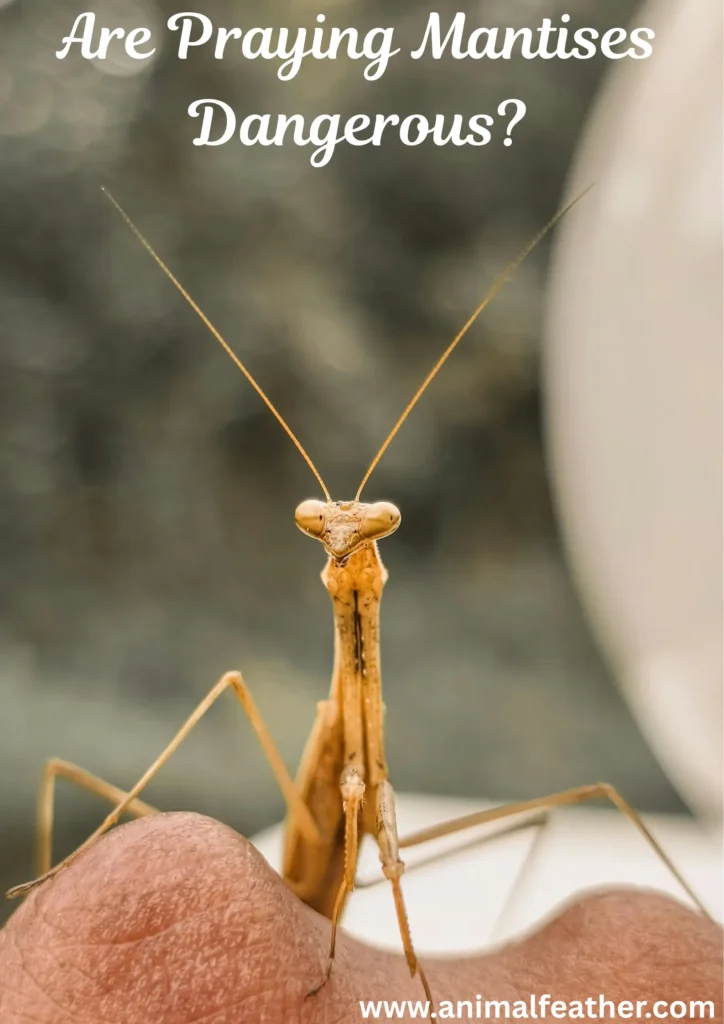
Are Praying Mantises Dangerous?
Despite their fierce appearance, praying mantises are harmless to most people. Their bodies are designed for catching insects—not attacking humans or other large animals. A praying mantis would rather:
- Hide among leaves.
- Stay perfectly still.
- Fly or climb away.
- Camouflage itself.
Only when escape isn’t possible may it attempt to defend itself. Even then, its goal is simply to protect itself rather than cause harm.
Can a Praying Mantis Bite Humans?
Yes, a praying mantis can bite a person, but it is not something that happens often. These insects use their mouthparts to catch and eat prey, not to attack humans. A bite is more likely when a mantis is grabbed, trapped, or feels that it has no way to escape.
A bite usually happens only if:
- Someone grabs the mantis tightly.
- It becomes trapped.
- It feels cornered.
- It mistakes a moving finger for food (very uncommon).
Most people who handle mantises carefully never experience a bite.
What Does a Praying Mantis Bite Feel Like?
If a praying mantis bites you, you may feel:
- A quick pinch.
- Mild discomfort.
- Slight redness.
- Minor skin irritation.
The bite is generally not severe and often requires no treatment beyond washing the area with soap and water. Most healthy adults recover quickly without complications.
Are Praying Mantises Venomous?
No. Praying mantises do not inject venom into humans or their prey. Instead, they rely on:
- Speed
- Camouflage
- Powerful grasping legs
- Strong jaws
to catch and consume insects. Unlike spiders or some insects, mantises have no venom glands used to attack people.
Are Praying Mantises Poisonous?
No. A harmful creature inflicts damage when contacted or ingested. Praying mantises are not poisonous, meaning they do not release toxins through their skin or body. This ensures they are safe to watch and, when treated carefully, safe to grasp.
How Do Praying Mantises Defend Themselves?
Although they aren’t dangerous, praying mantises have several impressive defense strategies.
Camouflage
Their first line of defense is blending into their surroundings. Many species resemble:
- Green leaves
- Brown twigs
- Dry grass
- Flowers
This camouflage helps them avoid predators and remain hidden while waiting for prey.
Threat Display
If camouflage fails, a mantis may try to appear larger by:
- Raising its front legs.
- Spreading its wings.
- Standing taller.
- Swaying from side to side.
Some species also display brightly colored patterns hidden beneath their wings to startle predators.
Pinching with Their Front Legs
The front legs of a praying mantis are equipped with sharp spines that help it grip prey. If handled carelessly, these legs can pinch your skin. Although the pinch may feel uncomfortable, it is rarely serious.
Are Praying Mantises Dangerous to Pets?
In most situations, praying mantises are not dangerous to pets such as cats and dogs. Most household pets are much larger than a praying mantis and are unlikely to be harmed if they encounter one. However, curiosity can lead to brief interactions.
Cats
Cats may paw at or chase a praying mantis. The mantis may defend itself by pinching or giving a small bite, but this is unlikely to cause serious injury.
Dogs
Dogs may sniff or try to eat a praying mantis. While the mantis is not poisonous or venomous, it’s still best to discourage pets from eating insects because they may carry parasites or have been exposed to pesticides.
Small Pets
For very small animals such as pet lizards, frogs, or small birds, a large praying mantis could potentially pose a risk if kept together. Mantises are opportunistic predators and may attack prey they can overpower.
Are Praying Mantises Dangerous to Children?
No. Praying mantises are generally safe for children to observe and, with adult supervision, to handle gently. Teaching children to respect wildlife is important. They should:
- Hold the mantis gently without squeezing.
- Avoid pulling its legs or wings.
- Let it walk onto their hand instead of grabbing it.
- Return it to its natural habitat after observing it.
These simple precautions help protect both the child and the insect.
Can a Praying Mantis Hurt You?
A praying mantis can hurt you slightly if it bites or scratches when it feels threatened, but serious injuries are very unlikely. These insects are not aggressive toward people and usually try to escape rather than fight. If you leave a mantis alone, there is little reason to worry about being hurt by it.
What Actions to Take If a Praying Mantis Bites You?
Although bites are rare, they can happen if the insect feels threatened. If you’re bitten:
Step 1: Stay Calm
A praying mantis bite is usually minor and not considered medically dangerous.
Step 2: Wash the Area
Clean the bite with soap and water to reduce the risk of infection.
Step 3: Monitor the Skin
You may notice:
- Mild redness
- Slight swelling
- Temporary discomfort
These symptoms typically disappear within a short time.
Step 4: Seek Medical Advice if Needed
Although uncommon, consult a healthcare professional if:
- Redness spreads significantly.
- Swelling becomes severe.
- Signs of infection develop.
- You experience symptoms of an allergic reaction.
Most bites heal without any special treatment.
Why Do Praying Mantises Bite?
A praying mantis does not bite because it wants to attack people. Instead, biting is a defensive response. Common reasons include:
- Feeling trapped
- Being squeezed
- Mistaking a moving finger for prey (rare)
- Protecting itself from danger
In almost every case, the mantis would rather escape than fight.
Are Praying Mantises Aggressive?
No. Despite their reputation as fierce hunters, praying mantises are not naturally aggressive toward humans. They spend most of their lives:
- Waiting for prey.
- Avoiding predators.
- Conserving energy.
- Remaining hidden.
Aggressive actions are typically aimed at insects and smaller prey instead of larger animals.
Praying Mantis vs Other Common Garden Insects
| Insect | Dangerous to Humans? | Can Bite or Sting? | Venomous? |
|---|---|---|---|
| Praying Mantis | No | Rare mild bite | No |
| Honey Bee | Can sting if threatened | Yes (sting) | Yes (venom in sting) |
| Wasp | Can sting repeatedly | Yes (sting) | Yes (venom in sting) |
| Ladybug | Generally no | Rare small bite | No |
| Butterfly | No | No | No |
| Grasshopper | Rarely, mild bite | Occasionally | No |
Compared with many other garden insects, the praying mantis is among the least likely to cause problems for people.
Are Praying Mantises Beneficial for Your Garden?
Absolutely. Praying mantises are considered beneficial because they feed on many insects commonly found in gardens. Their diet may include:
- Flies
- Moths
- Crickets
- Grasshoppers
- Caterpillars
- Beetles
By naturally reducing insect populations, they can help maintain ecological balance. However, they are generalist predators, meaning they may also catch beneficial insects such as bees or butterflies if given the opportunity.
Safety Tips When Handling a Praying Mantis
If you want to observe a praying mantis up close, follow these simple guidelines:
- Allow it to climb onto your hand instead of picking it up.
- Avoid squeezing its body.
- Keep handling sessions short.
- Never pull on its legs or wings.
- Wash your hands afterward, especially before eating.
- Release wild mantises where you found them.
These steps help ensure a safe experience for both you and the mantis.
Common Myths About Praying Mantises
Praying mantises have fascinated people for centuries, which has led to many myths and misunderstandings. Let’s separate fact from fiction.
Myth 1: Praying Mantises Are Dangerous to Humans
Fact: No. They may bite or pinch only if they feel threatened, and these injuries are usually minor.
Myth 2: Praying Mantises Are Poisonous
Fact: False. Praying mantises do not produce toxins that can harm humans or pets through touch or consumption.
Myth 3: Every Female Eats the Male After Mating
Fact: While sexual cannibalism can occur in some species, it does not happen every time. Many males mate successfully and survive.
Myth 4: Praying Mantises Attack People
Fact: Praying mantises do not hunt humans. Their natural prey consists of insects and other small animals they can overpower.
Interesting Facts About Praying Mantises
- There are more than 2,500 known species of praying mantises worldwide.
- They can rotate their heads nearly 180 degrees, giving them an unusually wide field of view.
- Their front legs are lined with sharp spines that help them securely grasp prey.
- They depend on camouflage instead of speed to evade predators.
- Some species imitate leaves, flowers, or sticks so convincingly that they are difficult to spot.
- Praying mantises are beneficial predators that help reduce populations of many garden pests.
- Despite their fierce appearance, they are shy insects that usually avoid confrontation with larger animals.
Frequently Asked Questions
Can a praying mantis bite you?
Yes. A praying mantis can bite if it feels threatened or is handled roughly. However, bites are uncommon and usually cause only minor discomfort.
Is a praying mantis bite dangerous?
No. A praying mantis bite is generally mild and does not contain venom. Most bites heal quickly after basic cleaning.
Are praying mantises poisonous?
No. They are neither poisonous nor venomous.
Can a praying mantis hurt a child?
Under normal circumstances, no. A child who handles a mantis gently is very unlikely to be injured. Adult supervision is recommended when interacting with any wild animal.
Are praying mantises good to have in the garden?
Yes. They help control populations of insects such as flies, grasshoppers, crickets, and caterpillars. Because they are generalist predators, they may also eat beneficial insects occasionally.
What happens if a praying mantis lands on you?
Usually, nothing. The mantis may simply explore your hand or clothing before moving away. It probably won’t bite unless it perceives a threat.
Can a praying mantis sting?
No. Praying mantises do not have stingers.
Can a praying mantis carry diseases?
There is no evidence that praying mantises commonly spread diseases to humans through normal contact.
Should you pick up a praying mantis?
Yes, if you do so gently. Allow the mantis to climb onto your hand instead of grabbing it, and avoid squeezing its body or legs.
What should you do if you find a praying mantis?
If you find one outdoors, it’s usually best to leave it where it is. It is likely helping control insect populations naturally.
Conclusion
Although their appearance may seem intimidating, praying mantises are not dangerous to humans. They are peaceful predators that spend their lives hunting insects and avoiding larger animals.
While they can bite or pinch if threatened, these defensive actions are rare and usually harmless. They are neither poisonous nor venomous and pose little risk to people, pets, or children when treated with respect.
In fact, praying mantises are valuable members of many ecosystems. By feeding on a variety of insects, they help maintain ecological balance and can even benefit home gardens by naturally reducing pest populations.
If you’re fortunate enough to encounter a praying mantis, take a moment to observe its remarkable behaviour—you’ll likely discover one of nature’s most fascinating and harmless hunters.