

Introduction
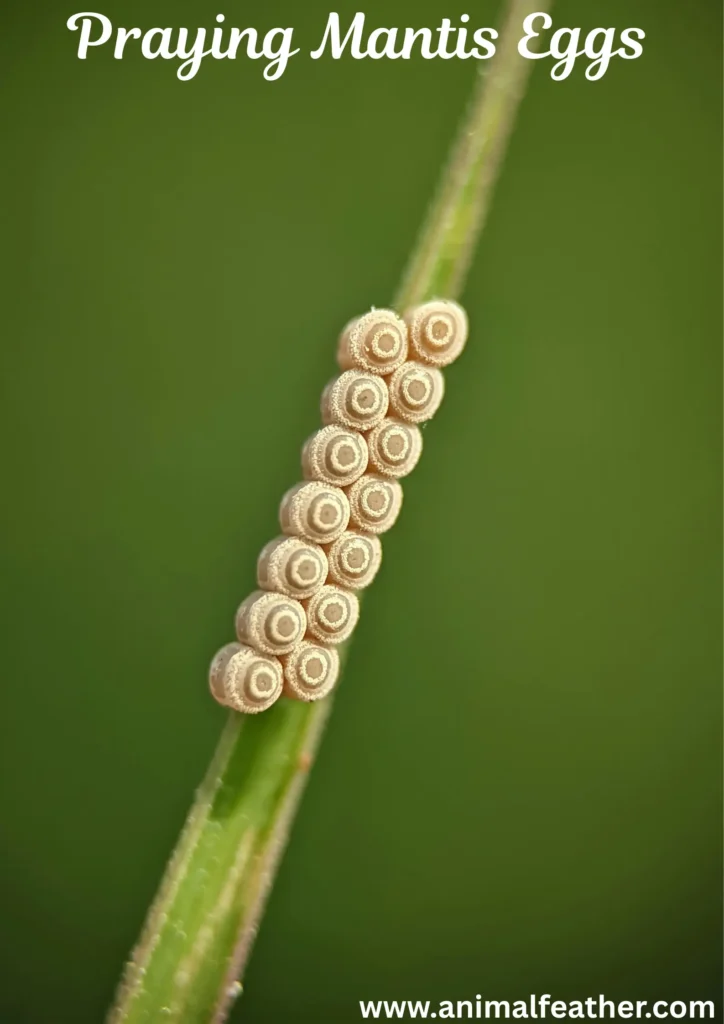
Have you ever noticed a small, tan-colored foam-like structure attached to a tree branch or garden fence and wondered what it was? It might be a praying mantis egg case, also known as an ootheca.
Although it looks simple from the outside, an ootheca is one of nature’s most impressive protective structures. Inside, dozens to hundreds of tiny praying mantises develop safely until the conditions are right for them to hatch.
For gardeners, wildlife enthusiasts, and anyone curious about insects, understanding praying mantis eggs is a great way to appreciate the early stages of these remarkable predators.
In this guide, you’ll learn how to identify a praying mantis egg case, how many eggs it contains, when they hatch, and what happens after the tiny mantises emerge.
Table of Contents
Quick Facts
| Feature | Details |
|---|---|
| Egg Case Name | Ootheca |
| Colour | Tan, brown, or cream |
| Texture | Foamy when fresh, hard when dry |
| Eggs per Ootheca | Dozens to hundreds (species dependent) |
| Hatching Season | Usually spring in temperate climates |
| Protection | Shields eggs from predators and weather |
What Are Praying Mantis Eggs?
Praying mantis eggs are enclosed inside a protective case called an ootheca. Rather than laying individual eggs in the open, the female surrounds them with a frothy secretion that quickly hardens into a durable outer shell. This structure protects the eggs from cold temperatures, drying out, and many predators.
The ootheca acts like a natural nursery, allowing the developing mantises to survive until environmental conditions are suitable for hatching.
What Is an Ootheca?
The word ootheca comes from Greek and means “egg case.” It is a hardened protective capsule that contains all of the eggs laid during a single egg-laying event.
Depending on the species, an ootheca may be:
- Oval
- Elongated
- Rounded
- Slightly flattened
Most are attached firmly to:
- Tree branches
- Shrubs
- Tall grasses
- Fence posts
- Garden structures
- Rocks
Once hardened, the egg case is remarkably durable and can withstand months of changing weather.
What Do Praying Mantis Eggs Look Like?
Many people mistake an ootheca for:
- A piece of dried foam
- Tree sap
- Mud
- A small cocoon
In reality, it has several distinctive characteristics. A typical praying mantis egg case is:
- Light brown, tan, or cream-colored.
- About 2–5 cm (0.8–2 inches) long, depending on the species.
- Firm and slightly spongy to the touch when fresh.
- Attached securely to a solid surface.
If you find one in your garden during autumn or winter, avoid disturbing it. It may contain developing mantises that will hatch in spring.
How Many Eggs Are Inside an Ootheca?
One of the most surprising facts about praying mantises is how many eggs a single female can produce. Depending on the species, one ootheca may contain dozens to hundreds of eggs.
However, not every egg survives. Weather, predators, disease, and environmental conditions all affect how many nymphs successfully hatch. Despite these challenges, the large number of eggs helps ensure that enough young mantises survive to adulthood.
When Do Praying Mantis Eggs Hatch?
The hatching time depends on the species and the climate where the praying mantis lives.
In temperate regions, females usually lay their egg cases in late summer or autumn. The eggs remain safely inside the ootheca throughout winter and hatch when temperatures become warmer in spring.
In tropical regions, where temperatures remain warm throughout the year, eggs can hatch significantly earlier due to the absence of a prolonged cold season.
Temperature is one of the biggest factors that determines when the young mantises emerge.
What is the Duration for Praying Mantis Eggs to Hatch?
There isn’t one exact answer because development depends on environmental conditions.
Generally:
| Climate | Approximate Hatching Time |
|---|---|
| Temperate Regions | Several months (over winter) |
| Warm Tropical Regions | A few weeks to a couple of months |
Eggs usually remain dormant until conditions provide the best chance for the tiny nymphs to survive.
How Do Baby Praying Mantises Hatch?
When the eggs are ready, tiny praying mantises emerge one after another through small openings in the ootheca. The newly hatched insects are called nymphs. At first they appear:
- Tiny
- Soft-bodied
- Pale in colour
Within a short time, their bodies harden and darken, allowing them to begin hunting almost immediately. Unlike many insects, praying mantis nymphs do not depend on their parents for food or protection.
What Do Baby Praying Mantises Look Like?
Baby praying mantises resemble miniature adults. They already have:
- A triangular head
- Large compound eyes
- Powerful front legs
- Excellent camouflage
However, they do not have fully developed wings. Instead, they grow through several molts before reaching adulthood. Despite their small size, they begin hunting tiny insects almost as soon as they hatch.
Where Should You Leave a Praying Mantis Egg Case?
If you discover an ootheca in your garden, the best option is usually to leave it exactly where you found it. Moving it unnecessarily may reduce the chances of successful hatching. A healthy egg case should remain attached to:
- Tree branches
- Shrubs
- Garden plants
- Wooden fences
- Natural vegetation
These locations provide protection while allowing the young mantises to spread into the surrounding habitat after hatching.
Can You Move an Ootheca?
Sometimes it becomes necessary to move an egg case—for example, if it’s attached to an object that will be removed or destroyed. If you must relocate it:
- Handle it gently.
- Keep the same upright position if possible.
- Attach it securely to another branch or similar surface outdoors.
- Avoid placing it inside a heated room unless you intend to raise the nymphs under controlled conditions.
Moving an ootheca carelessly can damage the eggs or cause them to hatch at the wrong time.
Common Predators of Praying Mantis Eggs
Although the ootheca provides excellent protection, it is not indestructible. Predators may include:
- Birds
- Small mammals
- Ants
- Parasitic wasps
- Other insects
Extreme weather, mould, or physical damage can also reduce the number of eggs that survive. Fortunately, the large number of eggs in a single ootheca helps increase the chances that at least some nymphs will hatch successfully.
Do All the Eggs Hatch?
Not always. Several factors influence hatching success, including:
- Weather conditions
- Humidity
- Fertilization
- Disease
- Predators
- Species differences
Even under ideal conditions, some eggs may never hatch. This is completely normal in nature.
Can You Keep a Praying Mantis Egg Case?
Yes, many people keep oothecae for educational purposes or to observe the hatching process. However, before collecting one, consider whether it is better left in its natural environment. If you decide to keep one:
- Store it in a cool, well-ventilated container.
- Avoid excessive heat.
- Avoid sealing it in a container that is airtight.
- Be prepared for dozens—or even hundreds—of tiny mantises to emerge over a short period.
If you’re not prepared to care for them or release them responsibly, it’s usually best to leave the ootheca outdoors.
Signs That an Ootheca Is Healthy
A healthy praying mantis egg case is usually:
- Firm and intact
- Attached securely to a surface
- Free from large cracks
- Light brown, tan, or cream in colour
- Dry rather than wet or mouldy
Minor color variations are typical and differ among species.
Interesting Facts About Praying Mantis Eggs
Praying mantis egg cases are among the most remarkable structures created by insects. Here are some fascinating facts:
- A single female can produce multiple oothecae during her lifetime if conditions are favorable.
- Depending on the species, one ootheca may contain dozens to hundreds of eggs.
- The foamy material surrounding the eggs hardens within a short time, forming a protective shell.
- Eggs can survive cold winter temperatures inside the ootheca in many temperate regions.
- Newly hatched nymphs begin hunting almost immediately after emerging.
- The female does not return to care for the eggs after laying them.
- Not every egg develops successfully, which is why females lay many eggs at once.
Common Myths About Praying Mantis Eggs
Myth 1: Every Egg Hatches
Fact: No. Some eggs fail to develop because of environmental conditions, disease, or lack of fertilization.
Myth 2: The Mother Protects the Eggs
Fact: Once the female finishes laying the ootheca, she leaves. The egg case itself provides protection until the young hatch.
Myth 3: You Should Bring Every Egg Case Indoors
Fact: In most situations, it’s better to leave an ootheca outdoors where it naturally belongs. Bringing it into a warm house can cause the eggs to hatch too early, when there may not be enough food available for the nymphs.
Myth 4: All Oothecae Look the Same
Fact: Different praying mantis species produce egg cases that vary in size, shape, and texture.
Frequently Asked Questions
What is the term for a praying mantis egg case?
An ootheca is the term used for a praying mantis egg case. It is a protective structure that contains all of the eggs laid during one egg-laying event.
How many eggs does a praying mantis egg case contain?
Depending on the species, an ootheca may contain dozens to hundreds of eggs.
When do praying mantis eggs hatch?
In temperate climates, most egg cases hatch in spring after spending the winter outdoors. In warmer climates, they may hatch much sooner.
What is the incubation period for praying mantis eggs?
The exact timing depends on temperature and species. Eggs may hatch after a few weeks in warm conditions or remain dormant for several months in colder regions.
What do baby praying mantises eat?
Newly hatched nymphs feed on tiny insects such as fruit flies, aphids, mosquitoes, and other small prey they can capture.
Is it possible for me to relocate a praying mantis egg case?
Yes, but only if necessary. Handle it carefully and keep it in the same orientation when attaching it to another outdoor surface.
Should I keep a praying mantis egg case?
If your goal is to observe the hatching process, you can. However, remember that many tiny mantises may emerge at once and will need suitable conditions or release into an appropriate outdoor environment.
What colour are praying mantis eggs?
The eggs themselves remain inside the ootheca. The outer egg case is usually tan, brown, or cream-colored, although the exact appearance varies by species.
Do praying mantises lay eggs every year?
Most adult females lay eggs once they have mated and conditions are suitable. In seasonal climates, they typically produce egg cases before winter.
How can I tell if an ootheca is empty?
After hatching, you may notice many tiny openings where the nymphs emerged. An intact-looking ootheca without these openings may still contain unhatched eggs, though appearance alone cannot always confirm whether it is occupied.
Conclusion
Praying mantis eggs are a fascinating part of one of nature’s most effective predators. Protected inside a tough egg case called an ootheca, dozens to hundreds of developing mantises remain safe until the right environmental conditions trigger hatching.
Whether you discover an ootheca in your garden, on a fence, or attached to a tree branch, it plays an important role in maintaining healthy insect populations. By understanding how praying mantis eggs develop and hatch, you gain a deeper appreciation for the remarkable life cycle of these incredible insects.
If you find an egg case outdoors, the best choice is usually to leave it undisturbed so the next generation of praying mantises can emerge naturally and help maintain a balanced ecosystem.

Pingback: Praying Mantis Life Cycle: From Egg to Adult (Complete Guide 2026)
Pingback: How Long Do Praying Mantises Live? Average Lifespan Explained