
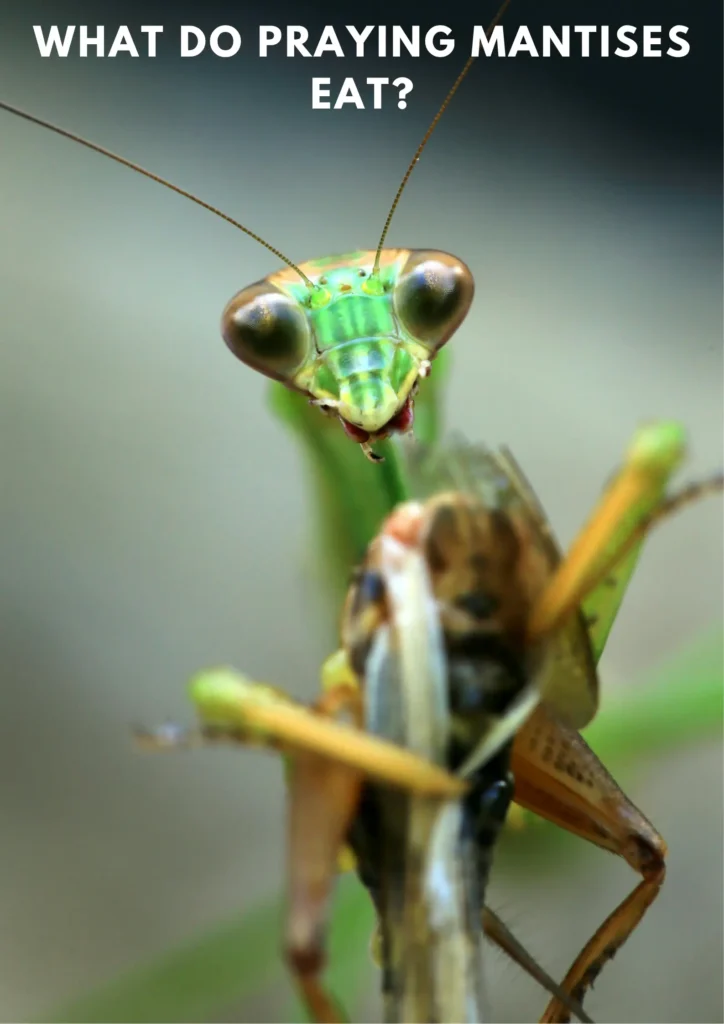

Praying mantises are carnivorous insects that survive by hunting live prey. Their diet mainly includes flies, mosquitoes, grasshoppers, crickets, moths, beetles, caterpillars, spiders, and other insects. Larger mantis species have even been observed catching small frogs, lizards, mice, and occasionally tiny birds. Their powerful front legs, sharp eyesight, and incredible patience make them one of nature’s most effective ambush predators.
Introduction
A praying mantis might seem serene while it remains still on a leaf, but don’t be deceived by its tranquil look. Hidden behind those folded front legs is one of the insect world’s most skilled hunters.
Unlike butterflies that sip nectar or caterpillars that feed on leaves, praying mantises are born predators. From the moment they hatch, they rely on stealth, speed, and precision to capture living prey. They don’t chase their meals for long distances. Instead, they wait patiently, perfectly camouflaged among leaves, flowers, or branches, until an unsuspecting insect comes within reach. Then, in less than a blink of an eye, they strike.
So, what do praying mantises eat? The answer depends on their age, size, habitat, and species. While most feed on common garden insects, larger species are capable of taking surprisingly large prey.
In this guide, you’ll learn exactly what praying mantises eat, how they hunt, what baby mantises feed on, and why these remarkable insects are considered valuable allies in many gardens.
Table of Contents
What Is a Praying Mantis?
A praying mantis is an insect belonging to the order Mantodea, a fascinating group that includes more than 2,400 recognised species found across tropical, subtropical, and temperate regions of the world.
Although many people think of them as garden insects, praying mantises live in a wide variety of habitats, including forests, grasslands, deserts, wetlands, and even urban gardens.
Several features make them instantly recognisable:
- A long, slender body.
- A triangular head.
- Expansive compound eyes with remarkable depth perception.
- Front legs specially adapted for catching prey.
- The ability to rotate their head nearly 180 degrees.
These unique adaptations make praying mantises some of the most successful insect predators on Earth.
Are Praying Mantises Carnivores?
Yes. Every known species of praying mantis is carnivorous.
Unlike many insects that feed on pollen, nectar, fruit, or leaves, praying mantises depend entirely on animal prey for survival. Their bodies are designed for hunting rather than grazing.
A praying mantis will not eat:
- Leaves
- Grass
- Flowers
- Fruit
- Seeds
Instead, it actively searches for moving prey. Movement triggers its hunting instinct, which is why pet mantises are usually fed live insects rather than dead ones. This specialised diet provides the protein and nutrients needed for growth, moulting, reproduction, and survival.
What Do Praying Mantises Eat?
Praying mantises are opportunistic predators, meaning they eat whatever suitable prey they can catch. Rather than searching for a specific insect, they wait patiently and seize almost any animal that comes within striking distance.
Their favourite prey includes:
- Flies
- Mosquitoes
- Crickets
- Grasshoppers
- Beetles
- Moths
- Caterpillars
- Butterflies
- Wasps
- Bees
- Aphids
- Cockroaches
- Leafhoppers
- Spiders
Because mantises feed on many insects that damage crops and garden plants, they are often welcomed by gardeners who prefer natural pest control over chemical pesticides.
However, they are not selective hunters. Along with harmful pests, they may also catch beneficial insects such as butterflies, ladybirds, lacewings, and even bees.
This means a praying mantis helps maintain ecological balance, but it does not distinguish between “good” and “bad” insects.
Favourite Foods of a Praying Mantis
Although they eat a wide range of prey, some insects are easier to catch than others.
Flies
Houseflies and hoverflies are among the most common foods because they frequently land near vegetation where mantises wait.
Grasshoppers
Grasshoppers are rich in protein and provide an excellent meal for adult mantises.
Crickets
Crickets are another favourite, especially for mantises kept as pets. They are highly nutritious and easy to catch.
Moths
Many mantises hunt at dusk or near outdoor lights where moths gather. A slow-flying moth often makes an easy target.
Caterpillars
Soft-bodied caterpillars provide plenty of nutrients and are commonly eaten during the growing season.
Spiders
Despite being predators themselves, spiders are often captured and eaten by larger mantises.
Do Praying Mantises Eat Bees?
Yes, praying mantises do eat bees, but they don’t actively hunt them. Bees usually become prey only when they fly close enough for a mantis to strike.
A mantis waiting on a flower may catch:
- Honey bees
- Bumblebees
- Solitary bees
Although this sounds alarming, bees are not a major part of a praying mantis’s diet. They are opportunistic hunters that eat whatever prey comes within reach.
For gardeners, this means praying mantises can occasionally catch pollinators, but they also consume many more harmful insects, such as aphids, caterpillars, and grasshoppers. Overall, they are still considered beneficial in most gardens.
Do Praying Mantises Eat Butterflies?
Yes. Butterflies are another food source, especially if they land nearby.
Butterflies may seem too delicate or fast to catch, but a mantis relies on patience rather than speed. It remains perfectly still until the butterfly comes within striking distance, then captures it with its spiny front legs in a fraction of a second.
Moths are even more common prey because they are active at dawn, dusk, and night, when many mantis species are also hunting.
Do Praying Mantises Eat Spiders?
Yes, spiders are regularly eaten by praying mantises.
Whether the spider becomes the hunter or the hunted often depends on:
- The size of both animals.
- Their species.
- Who notices the other first.
Small web-building spiders are especially vulnerable, while larger spiders may sometimes overpower a young mantis.
This highlights an important fact: in nature, predators can also become prey.
Do Praying Mantises Eat Ants?
Yes, but ants are not a favourite food.
Worker ants are small, fast, and often defend themselves by biting or releasing chemicals. Because of this, mantises usually prefer larger insects that provide more energy with less effort.
Young praying mantises may occasionally feed on individual ants, but adults often ignore them when other prey is available.
Do Praying Mantises Eat Ladybirds?
Yes, they can.
Ladybirds (ladybugs) are beneficial insects because they feed on aphids, but a praying mantis does not distinguish between beneficial and harmful insects. If a ladybird comes within reach, it may become a meal.
This is one reason why praying mantises are considered generalist predators rather than selective pest controllers.
Do Praying Mantises Eat Each Other?
Surprisingly, yes. Cannibalism is a natural behaviour in praying mantises, especially when food is scarce.
Young mantises may eat their siblings soon after hatching, and adults have also been observed eating other mantises.
One of the best-known examples occurs during mating. In some species, the female may eat the male before, during, or after mating. While this behaviour has made the praying mantis famous, scientists believe it happens less often in the wild than many people think.
The nutrients from the male can help the female produce healthy eggs, although successful mating often occurs without cannibalism.
What Do Baby Praying Mantises Eat?
Baby praying mantises, called nymphs, hatch from an egg case known as an ootheca. They look like tiny adults but lack fully developed wings.
Despite their small size, nymphs begin hunting almost immediately after hatching.
Their diet includes:
- Fruit flies
- Aphids
- Tiny mosquitoes
- Small gnats
- Young leafhoppers
- Other tiny insects
As they grow and moult, they gradually move on to larger prey.
Providing enough food is essential because hungry nymphs may begin eating one another.
How Do Praying Mantises Hunt?
Praying mantises are ambush predators. Instead of chasing prey, they rely on camouflage, patience, and lightning-fast reflexes.
A typical hunt follows these steps:
1. Finding the Perfect Spot
A mantis chooses a leaf, flower, branch, or stem where insects frequently pass.
Its body colour often blends perfectly with the surrounding vegetation, making it difficult for prey to notice.
2. Waiting Patiently
Unlike many insects that constantly move in search of food, a mantis may remain completely still for several minutes—or even hours.
This saves energy and increases the chances of surprising its prey.
3. Locking Onto the Target
The praying mantis has excellent vision.
Its large compound eyes provide depth perception, allowing it to judge distance accurately before striking.
When an insect comes close enough, the mantis slowly turns its head to follow every movement.
4. The Lightning-Fast Strike
Once the prey is within reach, the mantis launches its front legs forward with incredible speed.
The strike happens so quickly that the prey rarely has time to react.
Sharp spines on the front legs grip the victim tightly, preventing escape.
5. Eating the Meal
Unlike many predators, praying mantises often begin eating their prey while it is still alive.
They usually start with the head or thorax before consuming the rest of the body.
This behaviour may seem harsh, but it is simply part of their natural survival strategy.
Why Are Praying Mantises Such Successful Hunters?
Several unique adaptations make praying mantises remarkably effective predators:
- Excellent binocular vision for judging distance.
- A head that can rotate nearly 180 degrees.
- Powerful raptorial front legs with sharp spines.
- Camouflage that helps them blend into leaves, flowers, and branches.
- Patience to wait motionless until the perfect moment to strike.
- Extremely fast reflexes that give prey almost no chance to escape.
These features allow mantises to catch prey much larger than many other insects of the same size.
Do Praying Mantises Eat Plants?
No. Praying mantises do not eat plants.
Unlike grasshoppers, caterpillars, or many other insects that feed on leaves, stems, flowers, or fruit, praying mantises rely entirely on animal prey for nutrition.
You may occasionally see a mantis resting on a flower or leaf, but it is not feeding on the plant. Instead, it is waiting for insects attracted to the plant, such as flies, butterflies, or bees.
This is one reason gardeners often appreciate praying mantises—they protect plants by reducing the number of plant-eating insects rather than damaging the plants themselves.
Do Praying Mantises Drink Water?
Yes, but not in the same way larger animals do.
In the wild, praying mantises usually get enough moisture from:
- Morning dew
- Rain droplets
- Water contained in the insects they eat
Pet mantises may also drink small droplets of water sprayed onto leaves or the walls of their enclosure.
A shallow bowl of water is generally not recommended because young mantises can drown in it.
Are Praying Mantises Good for Gardens?
In most cases, yes.
Praying mantises are considered one of nature’s most effective pest controllers.
Benefits
- Help reduce aphids
- Eat caterpillars that damage vegetables
- Control grasshoppers
- Feed on flies and mosquitoes
- Reduce the need for chemical pesticides
Because they naturally hunt many crop-damaging insects, gardeners often encourage them to stay in vegetable patches and flower beds.
Are There Any Disadvantages?
Praying mantises are generalist predators, meaning they don’t know the difference between harmful pests and beneficial insects.
They may also eat:
- Honey bees
- Butterflies
- Ladybirds (ladybugs)
- Lacewings
Even so, most experts agree that their overall impact on a healthy garden is positive.
What Animals Eat Praying Mantises?
Although praying mantises are skilled hunters, they are not at the top of the food chain.
Their natural predators include:
- Birds
- Frogs
- Lizards
- Bats
- Spiders
- Small mammals
- Larger insects
Young mantises are especially vulnerable because of their small size.
Their best defence is camouflage. Many species resemble leaves, sticks, bark, or even flowers, making them difficult for predators to spot.
Quick Diet Summary
| Question | Answer |
| Are praying mantises carnivores? | Yes |
| Do they eat plants? | No |
| Do they eat flies? | Yes |
| Do they eat mosquitoes? | Yes |
| Do they eat spiders? | Yes |
| Do they eat bees? | Sometimes |
| Do they eat butterflies? | Yes |
| Do they eat ants? | Occasionally |
| Do baby mantises eat insects? | Yes |
| Are they good for gardens? | Generally yes |
Frequently Asked Questions
How often does a praying mantis eat?
Young mantises usually eat every day or every other day because they are growing quickly. Adults can often eat every two to four days, depending on the size of their meal.
Can a praying mantis eat dead insects?
Praying mantises strongly prefer live prey because movement triggers their hunting response. Some captive mantises may accept freshly killed insects, but many ignore prey that does not move.
Do praying mantises eat mosquitoes?
Yes. Both young and adult mantises may catch mosquitoes, although adults often prefer larger insects that provide more nutrition.
Can praying mantises eat worms?
They can eat small worms or larvae if they encounter them, but worms are not a regular part of their natural diet.
Do praying mantises eat cockroaches?
Yes. Small cockroaches are suitable prey for larger mantis species and provide a protein-rich meal.
Can praying mantises eat fruit?
No. Praying mantises are carnivores and do not survive on fruit, vegetables, or plant material.
Do praying mantises eat hummingbirds?
There are documented cases of large mantis species catching hummingbirds, but this is extremely rare. Insects remain their primary food source.
Can praying mantises survive without food?
Healthy adult mantises can survive several days without eating, but long periods without food weaken them and reduce their chances of survival
Why do praying mantises sometimes eat each other?
Cannibalism usually occurs when food is limited or during mating. It is a natural behaviour that helps some individuals survive.
Are praying mantises beneficial insects?
Yes. They help control many common garden pests naturally and are considered beneficial in most ecosystems.
Final Thoughts
Praying mantises are among the most fascinating predators in the insect world. Their remarkable eyesight, lightning-fast reflexes, and patient hunting style allow them to catch a wide variety of prey, from tiny flies to larger insects and, on rare occasions, even small vertebrates.
Although they sometimes eat beneficial insects such as bees and butterflies, they also help control many pests that damage gardens and crops. This balance makes them an important part of healthy ecosystems around the world.
Whether you spotted one in your garden or simply wanted to learn more about these incredible hunters, understanding what praying mantises eat gives you a deeper appreciation for the role they play in nature.
If you’d like to explore more amazing wildlife, browse our related guides on AnimalFeather to discover fascinating facts about insects, birds, reptiles, and other incredible creatures.

Pingback: Can Praying Mantises Fly? The Truth About Their Flying Ability (2026) - Animal Feather