
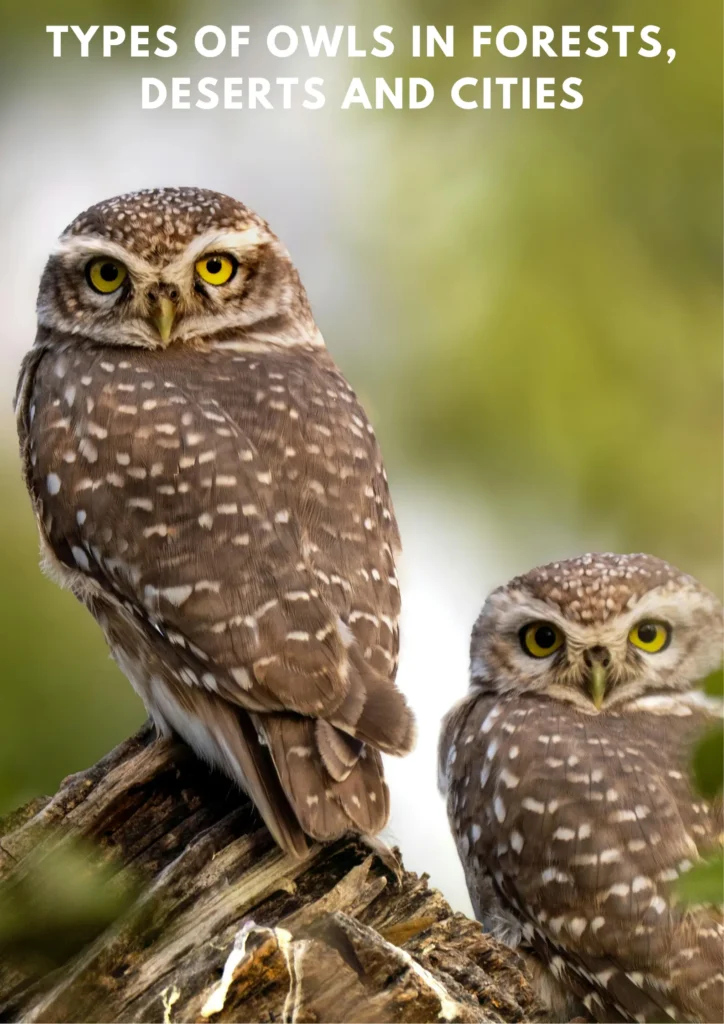

Owls are fascinating birds known for their large eyes, distinctive facial features, and remarkable hunting abilities. They live in a wide range of habitats, from Arctic tundra and forests to grasslands and deserts. Different owl species vary in size, appearance, diet, and behavior.
There are more than 200 recognized owl species worldwide. Some, like the Snowy Owl, are adapted to cold Arctic environments, while others, such as the Burrowing Owl, live in open grasslands and use underground burrows for shelter.
In this guide, you’ll discover different types of owls, learn where they live, explore what they eat, and understand the features that make each species unique.
Table of Contents
Types Of Owls
From the snowy landscapes of the Arctic to the dense forests of the tropics, owls come in many shapes and sizes. Let’s explore nine remarkable owl species and discover what makes each one special.
Barn Owl
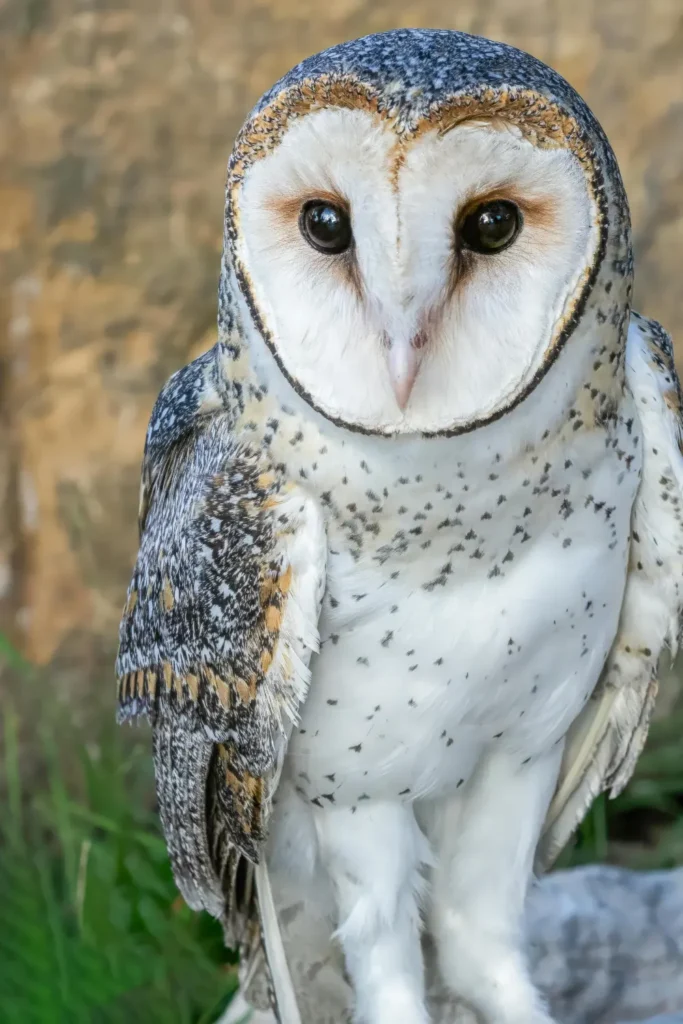
Barn Owls mainly feed on small mammals, especially mice, voles, and rats. They often hunt over farmland, grasslands, and open fields, using their excellent hearing to locate prey in darkness.
The Barn Owl is a widely distributed owl found on every continent except Antarctica. It is known for its pale feathers, heart-shaped facial disc, and long wings. Its light-colored face and silent flight make it a distinctive nocturnal hunter.
Snowy Owl
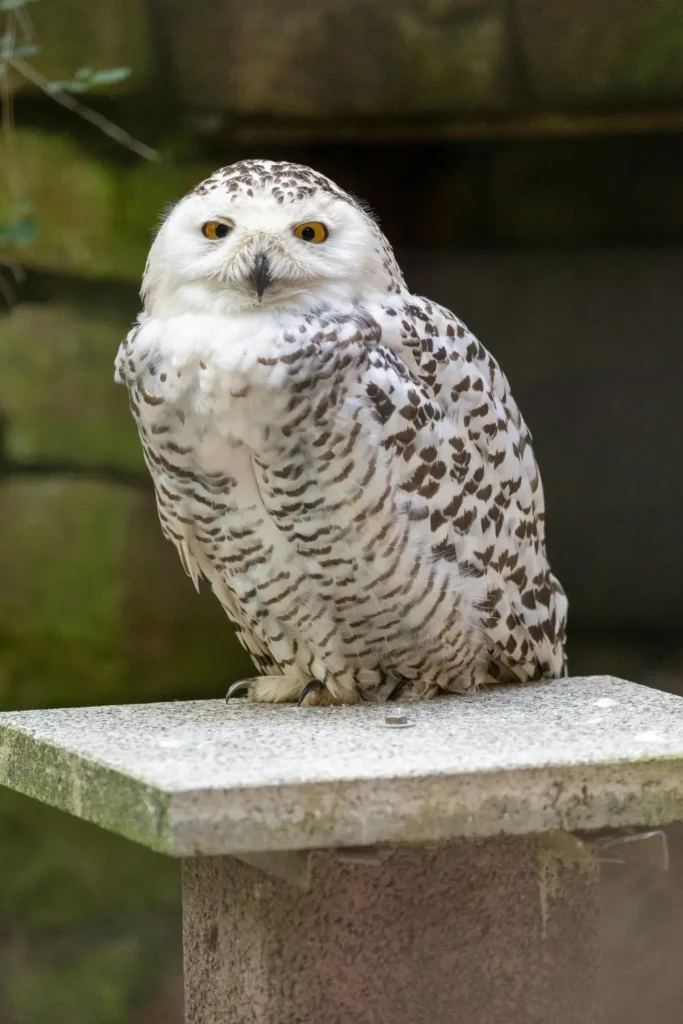
The Snowy Owl (Bubo scandiacus) is a large owl native to Arctic regions of North America, Europe, and Asia. It has thick feathers that help it stay warm in freezing temperatures. Males are usually mostly white, while females and young birds often have more dark markings.
Unlike many owl species, Snowy Owls are often active during the day, particularly in the Arctic summer when daylight lasts for long periods. Their diet consists mainly of lemmings and other small mammals, although they also hunt birds and other available prey.
Snowy Owls are well known for their striking white appearance and became especially famous among younger audiences through the Harry Potter films, which featured a snowy owl named Hedwig. In the wild, these owls rely on their excellent eyesight and hearing to locate prey across open, treeless landscapes.
Great Horned Owl
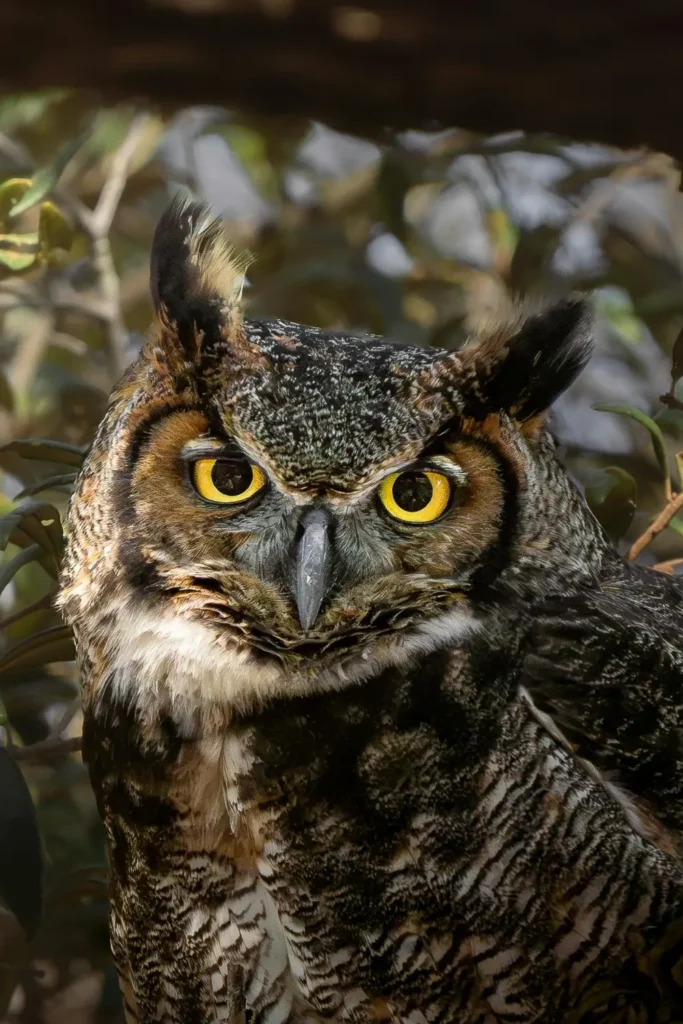
The Great Horned Owl (Bubo virginianus) is a powerful owl found across much of North and South America. It has large yellow eyes, prominent feather tufts that resemble horns, and mottled feathers that help it blend into its surroundings.
This owl lives in a variety of habitats, including forests, deserts, grasslands, and suburban areas. Its diet includes rabbits, rodents, birds, and other small animals. It can also catch larger prey, depending on its size and opportunity.
Great Horned Owls have strong talons that help them capture and kill prey. They are mainly active at night and are known for their deep, hooting calls.
Burrowing Owl
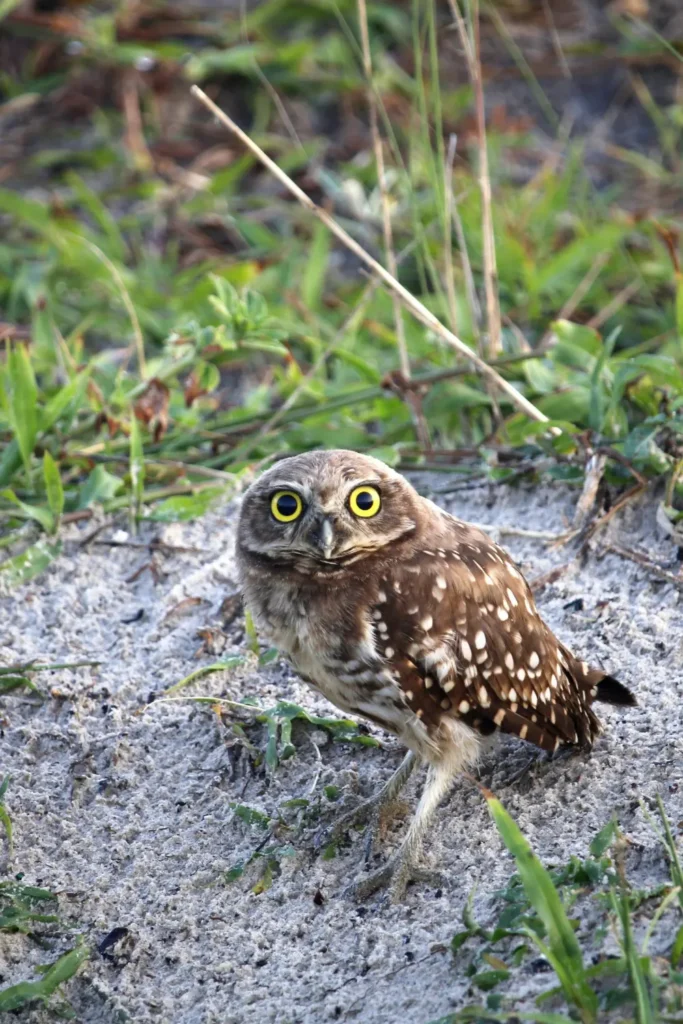
The Burrowing Owl is a small, long-legged owl found in open habitats across parts of North and South America. Unlike many owls that nest in trees, it lives in underground burrows, often using burrows originally dug by prairie dogs or other animals.
Burrowing Owls eat insects, small mammals, and other small animals. They are unusual because they can be active during the day, especially in the early morning and evening, although they may also hunt at night.
Eurasian Eagle Owl
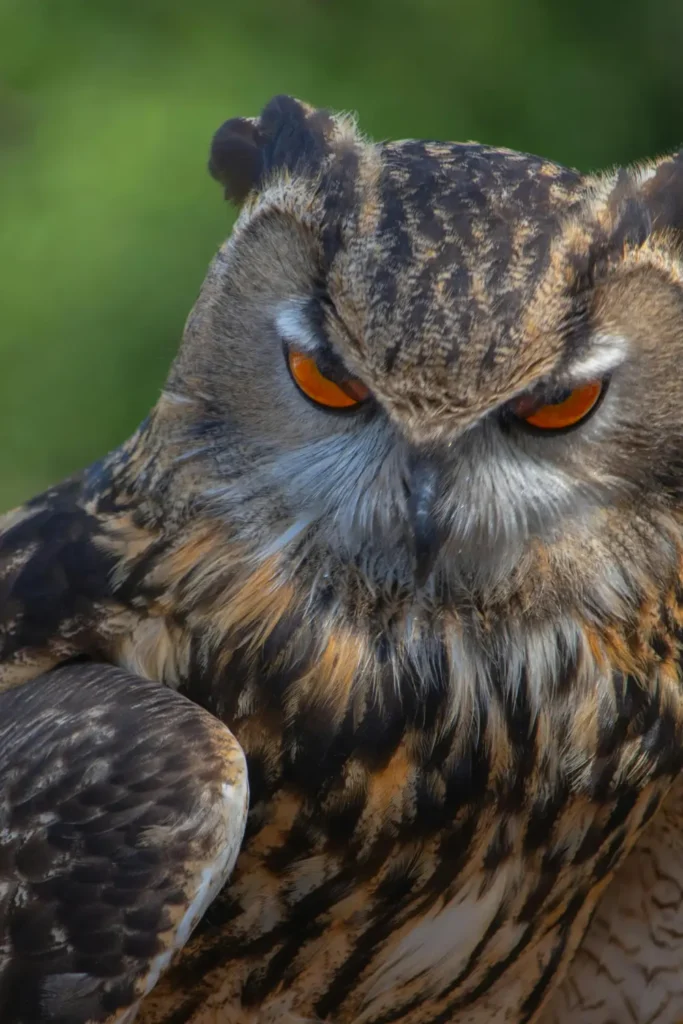
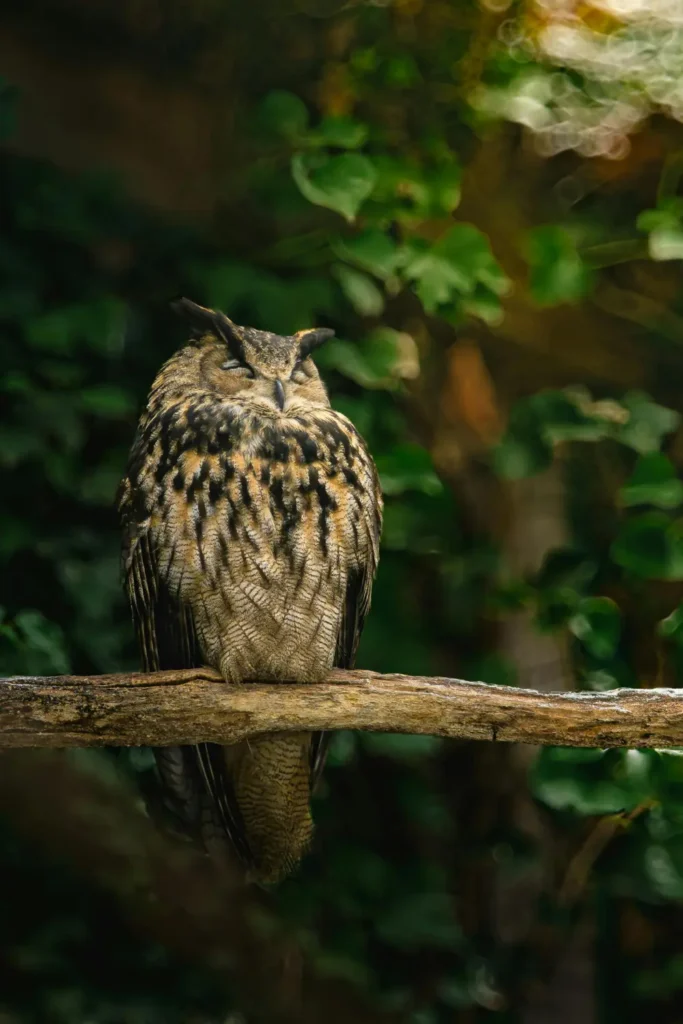
The Eurasian Eagle Owl (Bubo bubo) is one of the largest owl species in the world. It has striking orange eyes, prominent feather tufts, and mottled brown feathers that help it blend into rocky landscapes and woodland habitats.
This owl lives across parts of Europe and Asia, occupying habitats such as forests, mountains, cliffs, and open countryside. It hunts mainly at night and feeds on a wide range of animals, including rodents, rabbits, birds, and other mammals.
The Eurasian Eagle Owl uses its powerful talons to catch prey. Although it can hunt relatively large animals, its diet depends on what is available in its habitat.
Barred Owl
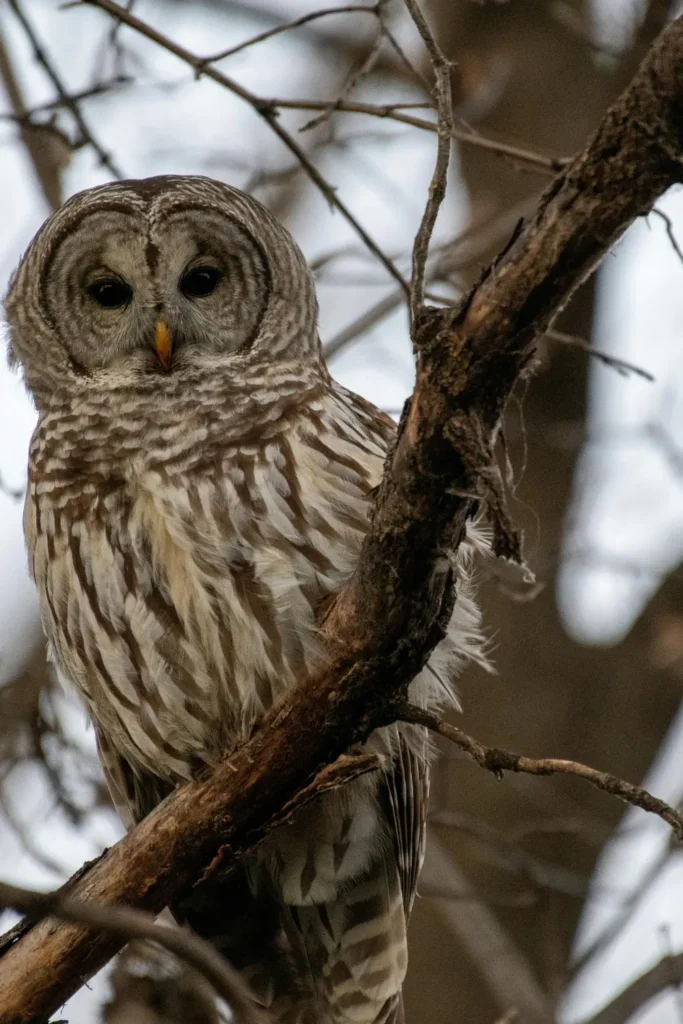
The Barred Owl (Strix varia) is a medium-to-large owl native to North America. It has brown and white feathers, dark eyes, and distinctive horizontal stripes across its chest. It is commonly found in mature forests, especially near water.
Barred Owls mainly eat small mammals, birds, amphibians, and other small animals. They are mostly active at night and are known for their recognizable call, often described as sounding like “Who cooks for you? Who cooks for you-all?”
Unlike the Great Horned Owl, the Barred Owl does not have prominent ear tufts. Both species are skilled hunters, but they differ in appearance, calls, and habitat preferences.
Little Owl
The Little Owl (Athene noctua) is a small owl native to parts of Europe, North Africa, and Asia. It has a rounded head, yellow eyes, and a compact body. Unlike many owl species, the Little Owl can be active during daylight, although it also hunts at dawn and dusk.
Its diet includes insects, earthworms, small mammals, and other small animals. It often lives in open countryside, farmland, orchards, and areas with scattered trees or old buildings.
Northern Saw-whet Owl:
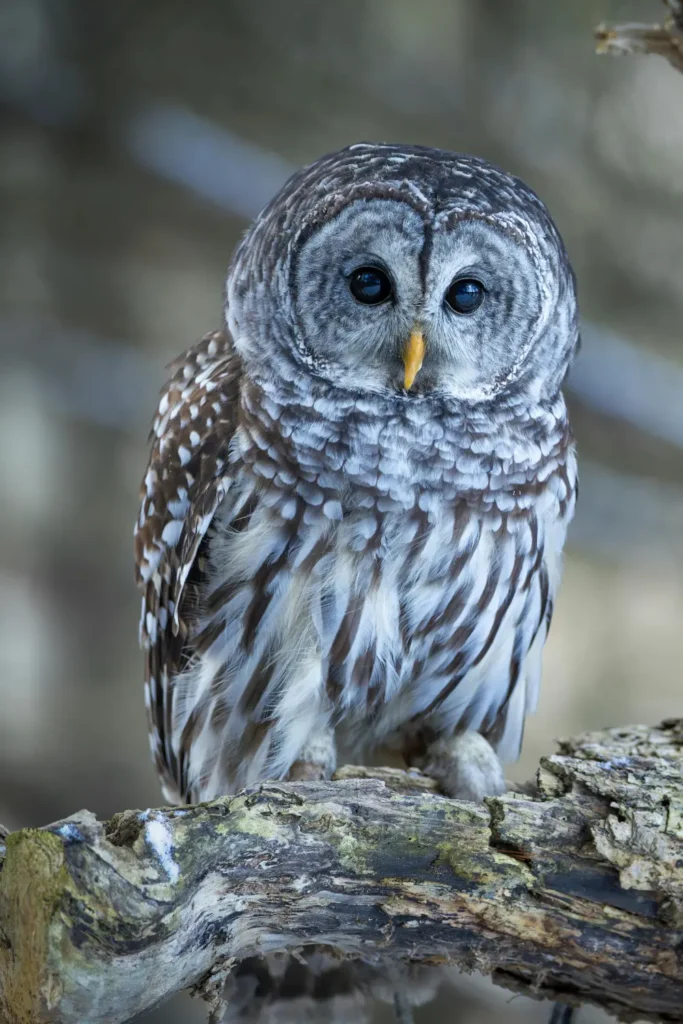
The Northern Saw-whet Owl (Aegolius acadicus) is a tiny owl native to North America. It typically measures about 7–8 inches long and has a rounded head, bright yellow eyes, and brown feathers marked with white spots. Its small size and big eyes give it a distinctive appearance.
This owl lives mainly in forests, especially areas with coniferous trees and dense vegetation. It feeds mostly on small mammals, such as mice and voles, although it may occasionally catch small birds and insects.
Northern Saw-whet Owls are primarily nocturnal and use their excellent hearing and sharp talons to locate and capture prey. Because they are small and often remain hidden in thick vegetation, they can be difficult to spot in the wild.
Spectacled owl:
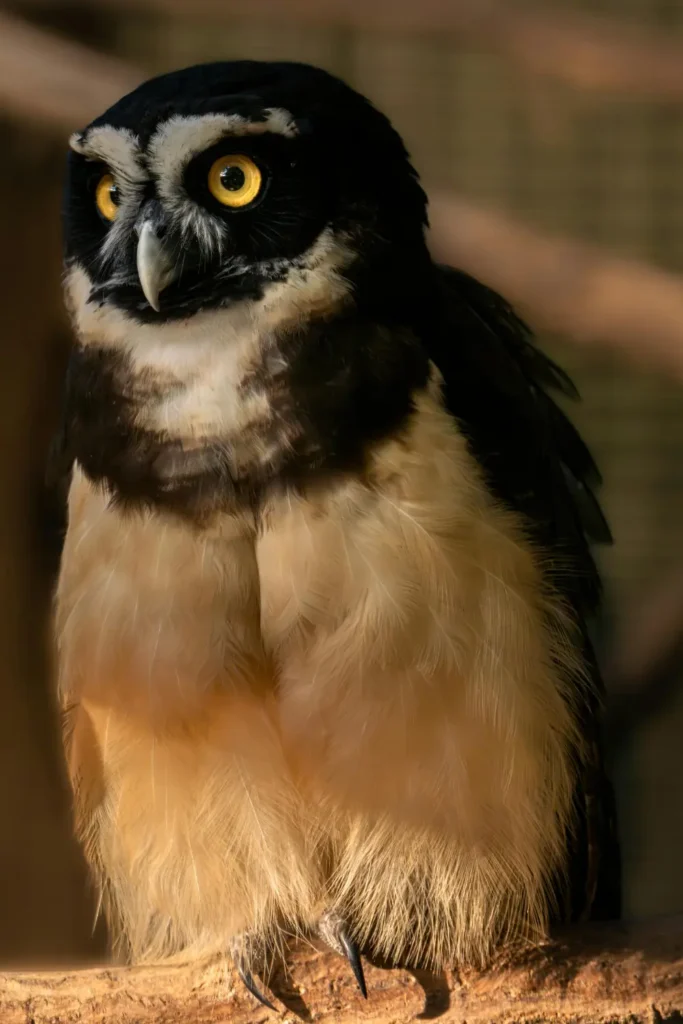
The Spectacled Owl (Pulsatrix perspicillata) is a tropical owl found in Central and South America. It gets its name from the pale markings around its dark eyes, which look like a pair of spectacles. Its dark brown feathers and light-colored chest make it easy to recognize.
Spectacled Owls live mainly in tropical forests, including rainforests and woodland areas. They feed on small mammals, birds, reptiles, and insects, depending on what is available.
These owls are primarily nocturnal, meaning they are most active at night. During the day, they usually rest in dense vegetation, where their feathers help them remain hidden.


Pingback: What Do Owls Eat? Diet, Prey, and Feeding Habits