

Introduction
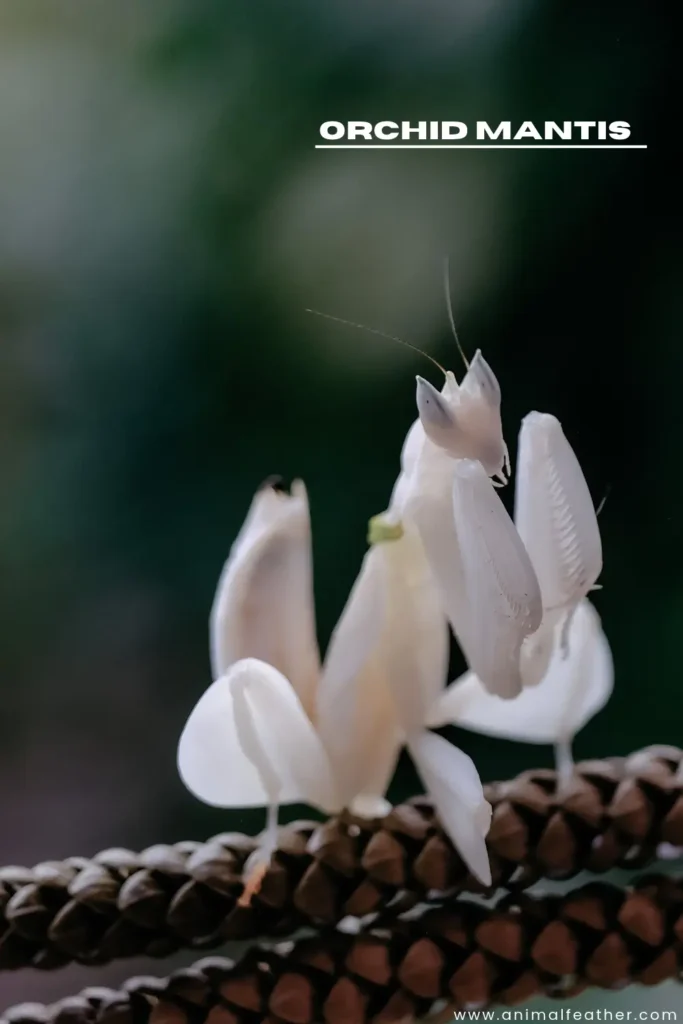
The orchid mantis (Hymenopus coronatus) is one of the most fascinating praying mantis species in the world. Known for its beautiful pink and white body and petal-like legs, this unusual insect looks remarkably similar to a flower. Native to Southeast Asia, it uses its flower-like appearance to attract unsuspecting insects, including pollinators, before catching them as prey. Unlike many other mantis species, the orchid mantis displays remarkable camouflage and hunting adaptations that make it especially interesting to study. Whether you want to learn about its size, lifespan, diet, natural habitat, or care requirements, this guide covers the essential facts about the orchid mantis.
What Is an Orchid Mantis?
The orchid mantis (Hymenopus coronatus) is a species of praying mantis famous for its flower-like appearance and unusual hunting behavior. It belongs to the family Hymenopodidae and is native to tropical regions of Southeast Asia.
What is an Orchid Mantis
This insect has a pink and white body, broad leg extensions that resemble flower petals, and excellent camouflage abilities. These features help it blend into flowering vegetation while waiting for insects to approach.
This insect has a pink and white body, broad leg extensions that resemble flower petals, and excellent camouflage abilities. These features help it blend into flowering vegetation while waiting for insects to approach.
Unlike ordinary praying mantises that often rely on hiding among leaves and branches, the orchid mantis can resemble a flower closely enough to attract potential prey. Its unusual appearance and hunting strategy make it one of the most recognizable mantis species.
Why Does an Orchid Mantis Look Like a Flower?
The orchid mantis has a flower-like appearance because its body and legs have evolved special shapes and colors that resemble flower petals. Its broad, flattened leg sections look like delicate petals, while its pink and white coloration helps it blend into flowering vegetation.
This unusual appearance is more than just camouflage. It also helps the mantis attract potential prey. In a scientific study published in The American Naturalist in 2014, researchers found that orchid mantises attracted wild pollinating insects, including bees, and captured them as food.
Interestingly, the orchid mantis does not need to sit on an actual orchid flower to use this hunting strategy. Its flower-like appearance can attract insects even when it is positioned among green vegetation.
Where Do Orchid Mantises Live?
Orchid mantises are native to tropical regions of Southeast Asia. They are found in countries such as Malaysia, Indonesia, Thailand, and nearby areas. These regions provide the warm temperatures and humid conditions that support their natural habitat.
Despite their flower-like appearance, orchid mantises do not depend on orchids or any particular flowering plant. They can live among different types of vegetation, including green leaves, shrubs, and flowering plants.
Natural Habitat
In the wild, orchid mantises live in warm, humid environments where insects are available for hunting. They often stay on plants and vegetation, using their unusual body shape and coloration to blend into their surroundings.
Their habitat provides suitable places to hide, hunt, and wait for insects to come within reach. Rather than actively chasing prey over long distances, they usually remain still and use their camouflage to capture approaching insects.
Countries Where Orchid Mantises Are Found
Orchid mantises are mainly associated with Southeast Asia. Their documented range includes:
- Malaysia
- Indonesia
- Thailand
- Myanmar
- Other nearby parts of the region
Their distribution is linked to warm tropical environments with suitable vegetation and prey.
What Does an Orchid Mantis Look Like?
The orchid mantis is known for its unusual appearance, which makes it look different from many other praying mantis species. Its body is usually white or pale pink, with broad extensions on its legs that resemble flower petals.
These features help it blend into vegetation and attract insects. Its appearance can vary depending on its age, development stage, and individual coloration.
Color and Physical Features
Orchid mantises commonly display white, pink, and sometimes greenish or brown markings. Their middle and hind legs have flattened extensions that look similar to flower petals.
They also have a triangular head, large eyes, and strong front legs designed for catching prey. Like other praying mantises, they use their front legs to grab and hold insects while feeding.
Young orchid mantises can look different from adults. Newly hatched nymphs may have darker red and black coloration, while their appearance changes as they grow and molt.
Male vs Female Orchid Mantis
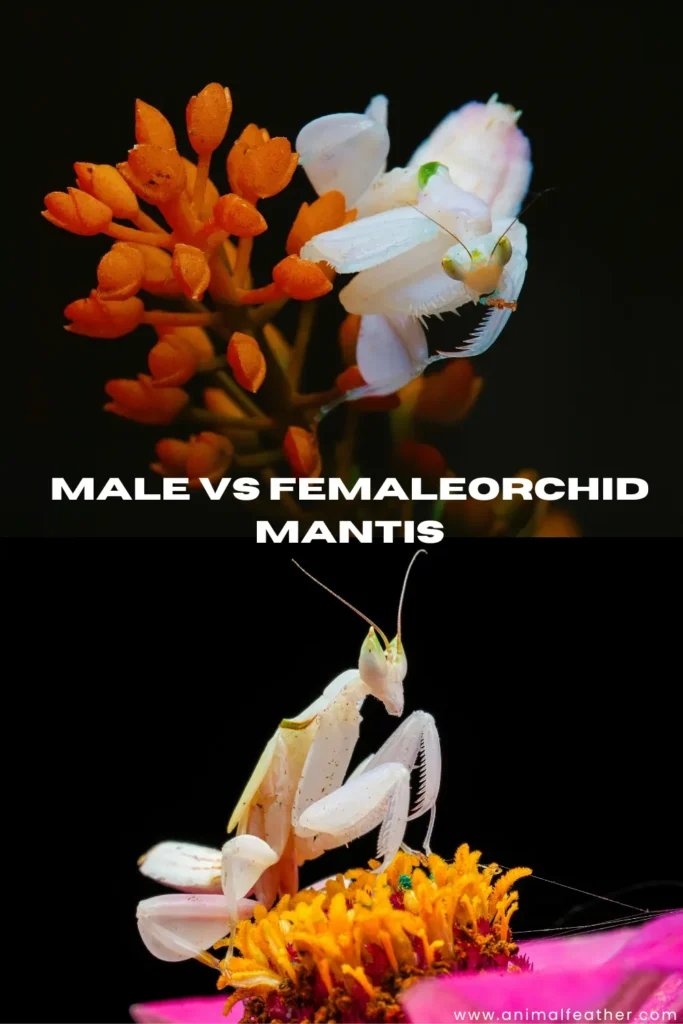
Male and female orchid mantises have noticeable physical differences. Females grow much larger and have broader bodies, while males remain smaller and slimmer.
| Feature | Female Orchid Mantis | Male Orchid Mantis |
| Adult size | About 6–7 cm | About 2.5–3 cm |
| Body shape | Larger and broader | Smaller and slimmer |
| Wings | Present in adults | Present in adults |
| Growth | Usually takes longer | Usually develops faster |
| Appearance | More robust | More slender |
This difference between the sexes is called sexual dimorphism. It is one of the most interesting characteristics of the orchid mantis.
Orchid Mantis Size Chart
The adult size of an orchid mantis depends strongly on its sex. Females are considerably larger than males.
| Sex | Approximate Adult Length |
| Male | 2.5–3 cm (1–1.2 inches) |
| Female | 6–7 cm (2.4–2.8 inches) |
These measurements are approximate, and individual mantises may vary. Females can grow to more than twice the length of males.
Orchid Mantis Lifespan
The orchid mantis has a relatively short lifespan compared with many other animals. Its total lifespan depends on factors such as sex, temperature, food availability, and living conditions.
Females generally live longer than males, although individual lifespans can vary. In a laboratory study conducted in southern China, researchers recorded an average lifespan of approximately 192 days for females and 138 days for males.
How Long Do Orchid Mantises Live?
An orchid mantis generally lives for several months, with its total lifespan often falling within approximately six to nine months. Some individuals may live longer or shorter depending on their development and environment.
Females usually have a longer development period and live longer than males. Good feeding, suitable humidity, proper temperature, and successful molting are important for their overall health.
Male vs Female Lifespan
Male and female orchid mantises do not develop at the same speed. Males usually reach adulthood earlier, while females take longer to complete their development.
A laboratory study recorded the following average lifespans:
| Sex | Average Lifespan in the Study |
| Male | About 138 days |
| Female | About 192 days |
These figures come from a particular research study and should not be treated as a guaranteed lifespan for every orchid mantis.
Orchid Mantis Life Cycle
The orchid mantis passes through several stages during its life. Like other mantises, it develops through incomplete metamorphosis, meaning it does not have a pupal stage.
Its life cycle includes:
- Egg Stage: The female lays eggs inside a protective foamy structure called an ootheca.
- Nymph Stage: Small mantises hatch from the eggs. They look like miniature mantises and begin hunting tiny insects.
- Molting and Growth: Young mantises shed their outer exoskeleton several times as they grow.
- Adult Stage: After their final molt, they develop into adults with fully formed wings and reproductive abilities.
Females generally go through more molts than males, which helps explain their larger adult size and longer development period.
What Do Orchid Mantises Eat?
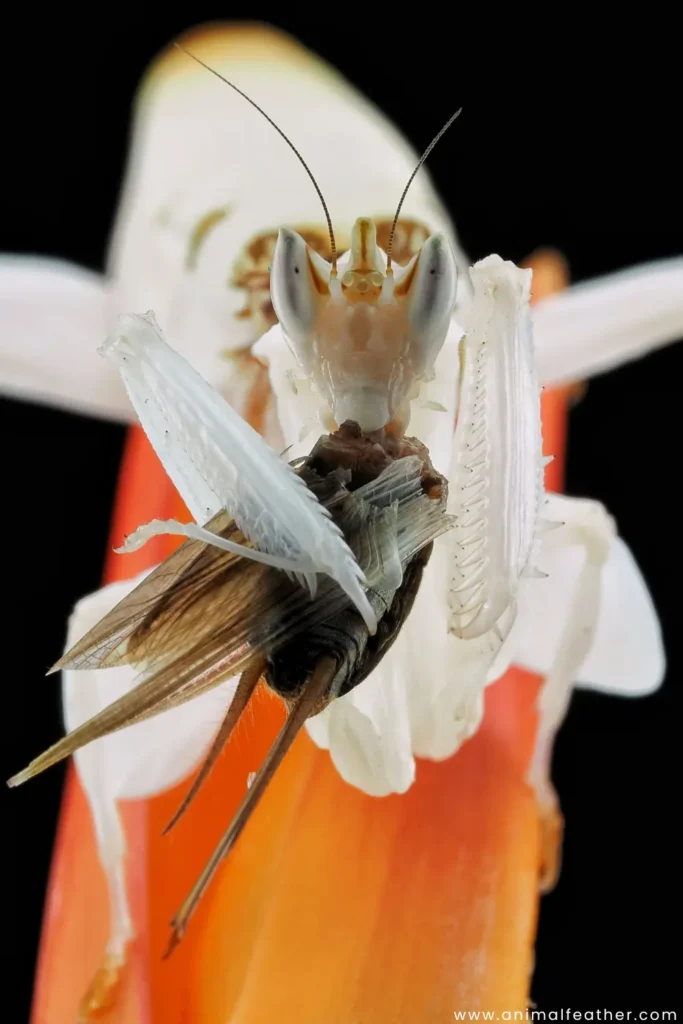
Orchid mantises are carnivorous insects that feed on other small insects. They are ambush predators, meaning they usually wait for prey to come close before catching it with their powerful front legs.
Their flower-like appearance can attract pollinating insects, including bees and other flying insects. This hunting strategy makes them particularly interesting among praying mantis species.
Diet in the Wild
In their natural habitat, orchid mantises mainly feed on insects that visit plants and flowers. Their diet can include:
- Bees
- Flies
- Butterflies
- Moths
- Other small flying insects
They remain still and use their camouflage to attract or wait for suitable prey. When an insect comes within reach, the mantis quickly grabs it with its front legs.
Diet in Captivity
Orchid mantises kept as pets need a suitable supply of live insects. Their food should be appropriate for their size and stage of development.
Common feeder insects include:
- Fruit flies for young nymphs
- Houseflies
- Green bottle flies
- Blue bottle flies
- Small moths
The size of the prey should match the size of the mantis. Avoid offering insects that are too large or difficult for it to control.
Wild-caught insects are not recommended because they may carry parasites or pesticide residues. Uneaten feeder insects should be removed, especially when the mantis is preparing to molt.
How Do Orchid Mantises Catch Their Prey?
Orchid mantises use a combination of camouflage, patience, and quick movements to catch insects.
Their petal-like legs and pale coloration help them resemble flowers. When an insect approaches, the mantis strikes with its spiny front legs and holds the prey securely.
It then uses its mouthparts to eat the captured insect. This hunting method allows the mantis to catch prey without spending much energy chasing it.
Orchid Mantis Care Guide
Orchid mantises have specific care requirements and are not always the easiest choice for beginners. They need suitable temperatures, humidity, ventilation, live food, and enough space to molt safely.
Anyone planning to keep an orchid mantis should learn about its needs before bringing one home.
Enclosure Size and Setup
An orchid mantis needs a secure enclosure with enough vertical space for climbing and molting. A mesh or ventilated enclosure is useful because it allows fresh air to circulate.
A suitable enclosure should include:
- Enough height for the mantis to hang upside down during molting.
- A secure mesh or textured ceiling for gripping.
- Small branches or plant stems for climbing.
- Good ventilation to prevent stagnant air.
- Enough open space for movement and hunting.
A commonly recommended minimum for an adult female is around 20 × 20 × 30 cm, although a larger enclosure can provide more room. Smaller juveniles need appropriately sized, secure containers so they can find their food easily.
Orchid mantises should normally be housed individually because they may attack and eat other mantises, including members of their own species.
Temperature Requirements
Orchid mantises need a warm environment to remain active and develop properly. Many care guides recommend daytime temperatures around 24–28°C, with slightly cooler conditions at night.
Avoid placing the enclosure in direct sunlight or near an uncontrolled heat source. Small enclosures can become dangerously hot very quickly.
A digital thermometer can help monitor the temperature inside the enclosure.
Humidity and Ventilation
Humidity is important for orchid mantises, particularly when they are growing and preparing to molt. A relative humidity level of approximately 60–80% is commonly recommended in care guides.
Lightly misting the enclosure can provide water droplets for the mantis to drink. However, the enclosure should not remain constantly wet.
Good ventilation is just as important as humidity. Stagnant, damp air can encourage mold and bacterial growth, which may harm the mantis.
Feeding Schedule
The feeding schedule depends on the mantis’s age, size, and appetite.
Young nymphs may need small feeder insects daily or every other day, while larger mantises are often fed every two to three days.
Check the size of the mantis’s abdomen to help judge whether it needs more food. A very thin abdomen may indicate that it needs feeding, while a very swollen abdomen can be a sign that it has eaten enough.
Always remove uneaten prey from the enclosure. Some feeder insects can injure a mantis, especially when it is molting.
Molting and Daily Care
Molting is a natural process that allows an orchid mantis to grow. During this stage, it sheds its old outer covering and develops a larger one.
A mantis preparing to molt may stop eating and become less active. This is normal behavior.
During molting:
- Do not handle or disturb the mantis.
- Make sure it has enough vertical space to hang freely.
- Remove live feeder insects from the enclosure.
- Maintain suitable humidity and ventilation.
- Avoid touching the mantis immediately after it has molted.
The new exoskeleton needs time to harden. Disturbing the mantis during this sensitive period can cause serious problems.
Are Orchid Mantises Good Pets?
Orchid mantises are attractive and fascinating insects, but they require more attention than some common pet mantis species.
Their special humidity, ventilation, feeding, and molting requirements mean that owners should understand their care needs before keeping one.
Are They Suitable for Beginners?
Orchid mantises may not be the best first choice for someone who has never kept an insect before. They need careful environmental control and a regular supply of suitable live food.
A beginner who has researched their requirements and can provide the correct enclosure may still be able to keep one successfully. However, it is important not to assume that their small size makes them easy to care for.
Can You Handle an Orchid Mantis?
Orchid mantises are delicate insects, so frequent handling is not recommended. Their legs and bodies can be injured if they are squeezed, dropped, or handled roughly.
It is usually better to observe them inside their enclosure. If moving one is necessary, allow it to walk onto a suitable branch or perch rather than grabbing it.
Never handle an orchid mantis while it is molting or preparing to molt.
Do Orchid Mantises Bite?
Orchid mantises can bite if they feel threatened or mistake a finger for food. However, they are not considered dangerous to humans.
Their bite may cause minor discomfort, but they are not venomous. The safest approach is to avoid unnecessary handling and let the mantis remain undisturbed.
Frequently Asked Questions About Orchid Mantises
Are Orchid Mantises Rare?
Orchid mantises are unusual insects and are not commonly seen by most people. They are native to parts of Southeast Asia and are less familiar than many other praying mantis species.
Their availability in the pet trade can vary depending on local breeders and regulations.
Are Orchid Mantises Poisonous?
No, orchid mantises are not poisonous or venomous. They catch and eat other insects using their front legs and mouthparts. They do not produce venom for defending themselves or capturing prey.
Can Orchid Mantises Fly?
Adult orchid mantises have wings. Males are smaller and generally more capable of flying, while the much larger females are less likely to fly effectively.
Their flying ability can vary depending on the individual and its condition.
Do Orchid Mantises Really Look Like Flowers?
Yes. Orchid mantises have broad, petal-like extensions on their legs and pale pink or white coloration that can make them resemble flowers.
Scientific research has shown that their flower-like appearance can attract pollinating insects. However, they do not copy one particular orchid species.
How Much Does an Orchid Mantis Cost?
The price of an orchid mantis depends on its age, sex, availability, breeder, and location. Younger nymphs may have different prices from adult females.
Shipping and enclosure equipment can also increase the total cost. If you are considering buying one, check reputable breeders and make sure that keeping or importing the species is permitted in your area.
Final Thoughts
The orchid mantis is one of the most remarkable praying mantis species because of its flower-like appearance, unusual hunting behavior, and impressive differences between males and females.
Native to Southeast Asia, this fascinating insect uses camouflage to attract and capture other insects. Its life cycle, feeding habits, and special adaptations make it an interesting subject for anyone who enjoys learning about unusual insects.
Although orchid mantises can be kept in captivity, they need suitable temperatures, humidity, ventilation, live food, and safe conditions for molting. Understanding these requirements is essential for anyone interested in keeping one as a pet.
Whether you are interested in its size, lifespan, diet, habitat, or care, the orchid mantis offers a fascinating example of how insects adapt to survive in nature.