

Introduction
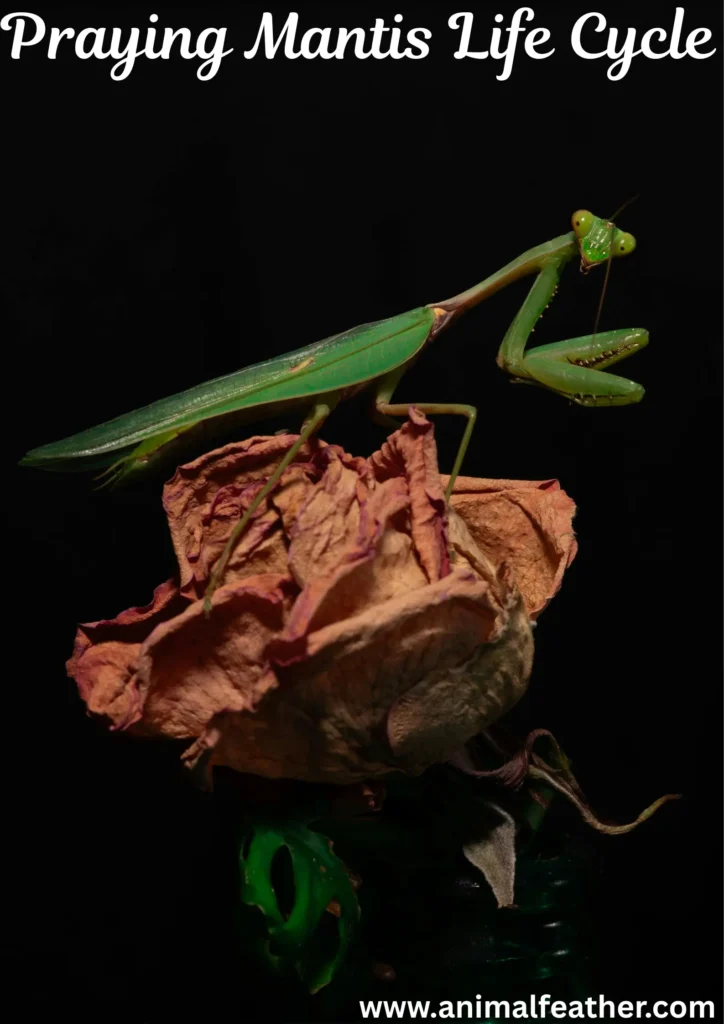
The praying mantis has one of the most fascinating life cycles in the insect world. Unlike butterflies, which undergo a dramatic transformation inside a cocoon, praying mantises develop gradually through several growth stages. Each stage prepares them to become skilled hunters capable of surviving in a wide range of environments.
A praying mantis begins life inside a protective egg case called an ootheca. After hatching, the tiny nymph looks like a miniature adult and immediately starts hunting. Over the following months, it sheds its outer skin multiple times until it finally reaches adulthood and becomes capable of reproduction.
In this guide, you’ll discover every stage of the praying mantis life cycle, how long each stage lasts, and the incredible changes that occur before these remarkable insects reach maturity.
Table of Contents
Quick Facts
| Feature | Details |
|---|---|
| Scientific Order | Mantodea |
| Type of Metamorphosis | Incomplete Metamorphosis |
| Life Cycle Stages | Egg → Nymph → Adult |
| Number of Molts | Usually 5–10 (species dependent) |
| Egg Case Name | Ootheca |
| Average Lifespan | 6–12 months |
| Time to Reach Adulthood | About 3–6 months (varies by species) |
What Is the Praying Mantis Life Cycle?
Like many insects, praying mantises pass through a series of developmental stages before becoming adults. Nonetheless, in contrast to butterflies and beetles, they do not undergo complete metamorphosis.
Instead, they undergo incomplete metamorphosis, meaning the young resemble miniature adults and gradually develop wings and reproductive organs through repeated molts.
The life cycle has three main stages:
- Egg
- Nymph
- Adult
Every phase is crucial for the mantis’s survival and reproduction.
Stage 1: Egg (Ootheca)
The life of every praying mantis(male or female) begins inside an egg case called an ootheca.
After mating, the female secretes a foamy substance that quickly hardens into a protective case around her eggs. This natural covering shields the developing embryos from cold weather, predators, and environmental damage.
Depending on the species, a single ootheca may contain dozens to hundreds of eggs.
The female carefully attaches the egg case to:
- Tree branches
- Plant stems
- Shrubs
- Fence posts
- Rocks
In temperate regions, the eggs usually remain dormant throughout winter and hatch when temperatures rise in spring.
What is the incubation period for praying mantis eggs?
The hatching time depends on:
- Temperature
- Humidity
- Species
- Climate
In many regions, eggs laid in autumn hatch several months later during spring. In warmer tropical climates, development may occur more quickly. Just before hatching, tiny nymphs emerge from the ootheca one after another, often within a short period.
Stage 2: Nymph
The nymph stage begins immediately after hatching.
Unlike caterpillars, newly hatched praying mantises already resemble tiny adults. They have:
- Large compound eyes
- Folding front legs
- Triangular heads
- Excellent hunting instincts
However, they lack one important feature:
Fully developed wings.
Despite their tiny size, nymphs begin hunting almost immediately, feeding on aphids, fruit flies, mosquitoes, and other small insects.
First Molt
As a praying mantis grows, its hard outer skeleton cannot expand.
To continue growing, it must shed its old exoskeleton through a process called molting. The first molt usually occurs soon after hatching.
During this process:
- The old skin splits.
- The mantis slowly pulls itself free.
- The new exoskeleton is soft.
- Within a few hours, it hardens.
Molting is one of the most vulnerable periods in a mantis’s life because it cannot defend itself until its new exoskeleton becomes firm.
How frequently does a praying mantis molt?
A praying mantis does not grow continuously. Instead, it grows in stages by shedding its exoskeleton multiple times.
Most species molt 5 to 10 times before reaching adulthood, although the exact number depends on the species, diet, and environmental conditions. Each molt is called an instar. After every instar, the mantis becomes:
- Larger
- Stronger
- Better at hunting
- More developed
Small wing buds begin to appear after several molts and gradually grow larger until adulthood.
Why Is Molting Important?
Molting is essential because the mantis’s hard exoskeleton cannot stretch. Without molting, the praying mantis would never grow beyond its current size. Each successful molt allows the mantis to:
- Increase its body size.
- Develop stronger legs.
- Improve its hunting abilities.
- Grow wing buds.
- Reach sexual maturity.
A failed molt can be fatal, especially if the mantis becomes trapped in its old exoskeleton.
How Do Wings Develop?
One of the biggest changes during the life cycle happens in the later nymph stages. At first, young mantises have no visible wings.
After several molts:
- Small wing buds appear.
- The buds gradually become larger.
- During the final molt, fully developed adult wings emerge.
Not every adult mantis becomes a strong flyer. In many species, males fly much better than females because they have lighter bodies.
Stage 3: Adult
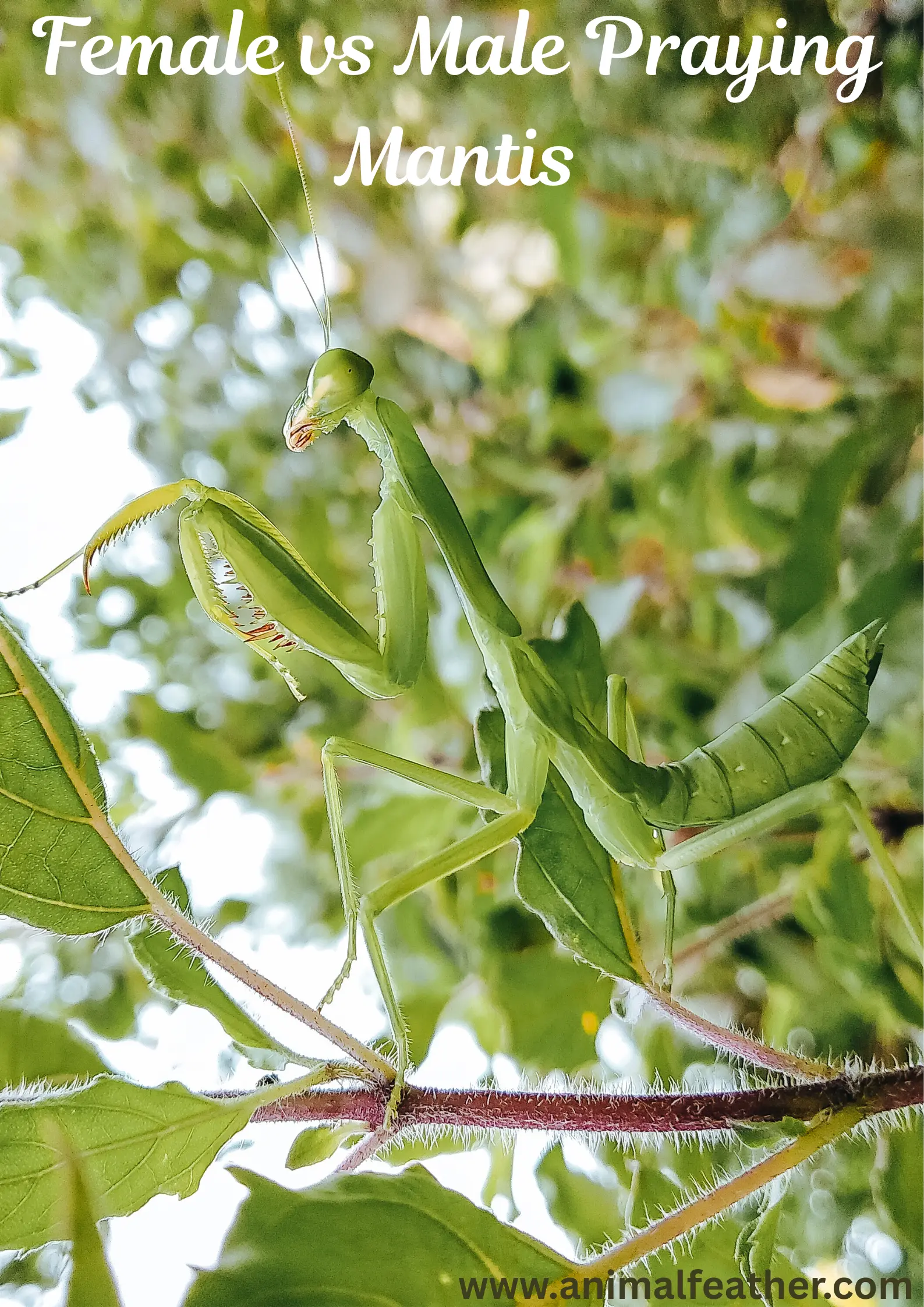
The final stage of the praying mantis life cycle is adulthood. After the last molt, the mantis reaches its full size and becomes capable of reproduction. Adult praying mantises have:
- Fully developed wings (in winged species)
- Mature reproductive organs
- Powerful grasping front legs
- Excellent eyesight
- Advanced hunting skills
Adults no longer molt. Once they reach maturity, all of their energy goes toward hunting, surviving, and reproducing.
Reproduction
During the breeding season, adult males search for females by flying or climbing through vegetation. Once mating is complete, the female begins producing eggs. Within days or weeks, she creates one or more oothecae, each containing dozens to hundreds of eggs, depending on the species.
These egg cases protect the next generation until they hatch.
What is the Duration of the Complete Life Cycle?
The complete life cycle varies between species and climates.
Here’s a general timeline:
| Stage | Approximate Duration |
|---|---|
| Egg | Several weeks to several months |
| Nymph | About 2–5 months |
| Adult | About 2–6 months |
| Total Life Cycle | Roughly 6–12 months |
Tropical species may develop more quickly, while species in cooler regions often have a longer egg stage because the eggs overwinter.
Challenges During the Life Cycle
Not every praying mantis survives to adulthood. Common threats include:
Predators
Young mantises are eaten by:
- Birds
- Lizards
- Frogs
- Spiders
- Larger insects
Weather
Heavy rain, freezing temperatures, and strong winds can reduce survival, especially during the egg and nymph stages.
Lack of Food
Young mantises must begin hunting almost immediately after hatching. Without enough insects to eat, they may not survive long enough to molt.
Failed Molts
Molting is one of the most dangerous periods in a mantis’s life. If humidity is too low or the mantis cannot hang properly while shedding its exoskeleton, the molt may fail, leading to injuries or death.
Life Cycle Timeline
Egg (Ootheca) to Tiny Nymph to Several Molts (5–10 Instars) to Wing Development to Adult Praying Mantis to Mating to Female Lays Ootheca to New Generation BeginsThis simple cycle repeats every generation and has allowed praying mantises to thrive in habitats around the world for millions of years.
Complete vs. Incomplete Metamorphosis
Many individuals think that praying mantises grow like butterflies, but that is incorrect.
Butterflies experience full transformation, moving through four separate phases:
- Egg
- Larva (caterpillar)
- Pupa (chrysalis)
- Adult
Praying mantises experience incomplete metamorphosis, which has only three stages:
- Egg
- Nymph
- Adult
The biggest difference is that a mantis nymph already looks like a tiny adult. Instead of transforming inside a cocoon, it gradually grows larger by molting several times until it reaches maturity.
Interesting Facts About the Praying Mantis Life Cycle
- A single egg case (ootheca) may contain dozens to hundreds of eggs, depending on the species.
- Newly hatched nymphs begin hunting within hours of emerging.
- Praying mantises do not build nests or care for their young after the eggs are laid.
- Each molt brings the nymph closer to adulthood and helps develop its wings.
- Adult mantises never molt again after reaching maturity.
- In colder climates, the egg stage often lasts through winter before hatching in spring.
- Not every nymph survives to adulthood because predators, weather, and food shortages reduce survival rates.
Why Understanding the Life Cycle Matters
Learning about the praying mantis life cycle helps us understand why these insects are such effective predators.
For gardeners, knowing when mantis eggs hatch can help protect young nymphs that naturally reduce pest populations.
For photographers and wildlife enthusiasts, understanding seasonal changes makes it easier to find mantises at different stages of development.
For anyone keeping a pet mantis, understanding molting and growth is essential for providing proper care and avoiding common problems.
Frequently Asked Questions
What are the phases of a praying mantis life cycle?
The praying mantis has three life stages:
- Egg (inside an ootheca)
- Nymph
- Adult
Unlike butterflies, praying mantises do not have a larval or pupal stage.
What is an ootheca?
An ootheca is a protective egg case made by the female praying mantis. It shields the eggs from predators and harsh weather until they hatch.
What is the number of eggs produced by a praying mantis?
Depending on the species, one ootheca may contain anywhere from dozens to hundreds of eggs.
How long does it take a praying mantis to become an adult?
Most praying mantises reach adulthood in about 3 to 6 months, although the exact time depends on the species, climate, and food availability.
How many times does a mantis shed its skin?
Most species molt between 5 and 10 times before becoming adults.
Can baby praying mantises fly?
No. Nymphs hatch without fully developed wings and cannot fly until after their final molt, if their species develops functional wings.
Do praying mantises die after laying eggs?
Many females die naturally after laying their egg cases, especially in regions with cold winters. However, this varies depending on the species and environmental conditions.
How long do praying mantises live?
Most praying mantises live 6 to 12 months, although lifespan differs among species and habitats.
What is the most dangerous stage of the life cycle?
The molting stage is often the riskiest because the mantis is soft, vulnerable, and unable to defend itself until its new exoskeleton hardens.
Do praying mantises care for their babies?
No. After laying the ootheca, the female provides no parental care. Newly hatched nymphs are independent from the moment they emerge.
Conclusion
The praying mantis life cycle is a remarkable example of nature’s efficiency. From a well-protected egg case to a tiny hunting nymph and finally a fully grown adult, every stage prepares the mantis for survival.
Unlike insects that undergo complete metamorphosis, praying mantises develop gradually through incomplete metamorphosis, becoming larger and stronger with each molt. Their ability to hunt from an early age, adapt to different habitats, and reproduce successfully has made them one of the world’s most successful insect predators.
Whether you’re studying insects, gardening, or simply curious about wildlife, understanding the praying mantis life cycle offers a deeper appreciation for these extraordinary creatures and the important role they play in healthy ecosystems.

Pingback: How Long Do Praying Mantises Live? Average Lifespan Explained